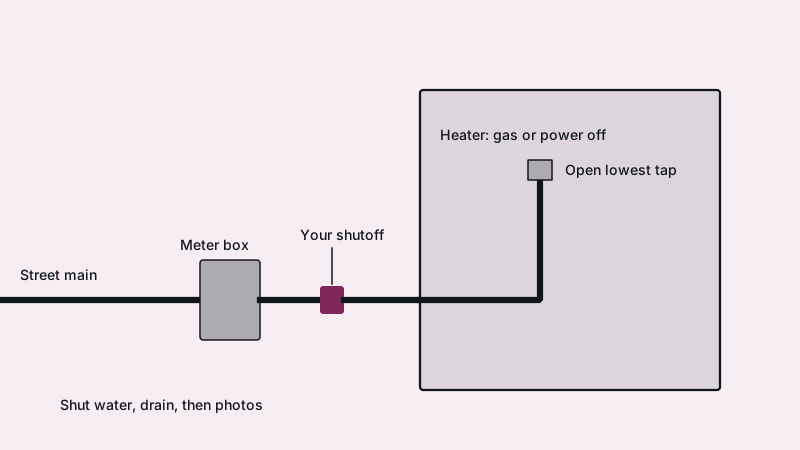
Close the house main. Do that before reading another word, because every minute the pipe runs adds to the repair. With the flow stopped, there is room to dry out, make calls and take notes. A slow wet patch rather than a gusher is covered in the broader page on leaks in Mission Viejo homes; this page is for the pipe that has actually let go.
What comes first, in the opening minute?
Rotate the house main to shut, normally a wheel or lever beside the front spigot or inside the garage wall. Next, bleed the system through the lowest faucet. If hot water is the thing spraying, also kill the heater, since a full tank keeps feeding the leak. Stay away from wet outlets, and do not touch a soaked panel.
The shutoff you operate is the one on your side. The meter box and street valve belong to the water district, which differs by street, so confirm with your water district. On Moulton Niguel's Fix-a-Leak page, the district describes everything past the meter as the owner's, which makes the repair yours to arrange. Locate your main on a calm day, and put a flashlight next to it.
What matters in the hour after that?
Photograph the scene before touching anything. Then relocate valuables, roll up soaked rugs, and start removing water with a mop or a wet-dry vacuum plugged in well away from the wet zone. Open windows, point fans at damp surfaces, and contact the plumber and the insurance company, since policies expect you to limit further harm.
California's insurance department advises owners to halt a leak where it starts and to report the claim at once, because later damage can go unpaid when sensible steps were skipped. Hold on to receipts for fans, rentals and emergency work. Keep damaged belongings until the adjuster has looked, and note what each item was and roughly how old it was.
What bursts a pipe in a climate that rarely freezes?
Pressure, age and ground movement do the work that frost does elsewhere. Plumbing code in California wants a regulator wherever static pressure rises past 80 psi, and parts of south Orange County can see high supply pressure. Pitted copper, polybutylene installed from 1978 to 1995, steel pipe from the original build and shifting soil add to it.
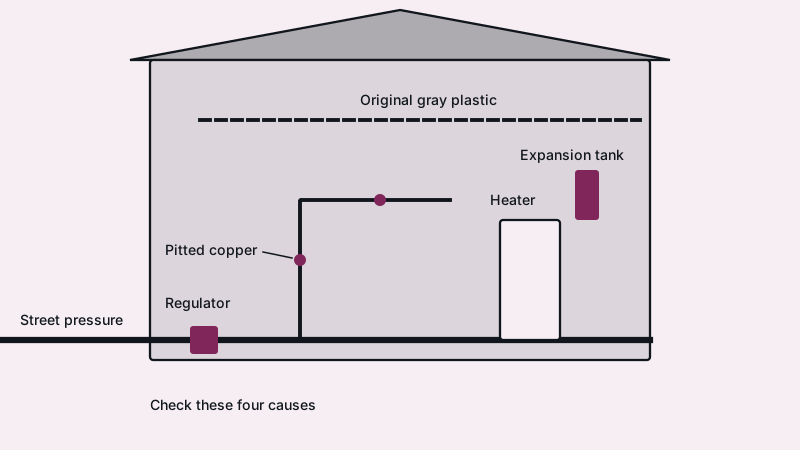
Candidates to check at your own house:
- A regulator that has died or was never installed, letting street pressure reach every line. Where the regulator sits explains how to find it.
- Copper corroded from the inside, described under pinhole leaks.
- Gray plastic or rusting steel lines from the first owner.
- No expansion tank on the heater although the system is closed to the street.
- Digging, roots, or a quake that bent a run.
A longer treatment is in why pipes burst, and what lowers the odds is in burst pipe prevention.
Where is the pipe, if I only see a stain?
Water follows framing and seldom drops straight down, so a ceiling stain may sit well away from the break. A meter still creeping with every tap shut proves a leak exists, and EPA WaterSense describes a two-hour version of the test. After that a plumber pins down the spot with listening equipment or thermal imaging.
Warm floor tiles, a hissing wall, bubbled paint and a bulging ceiling are the usual giveaways. If a ceiling is bulging, put a bucket under it first; a small relief hole can prevent a collapse, but stay well away from light fixtures. Staining is covered under ceiling damage from leaks, what a search costs is under leak detection pricing, and the early clues are laid out in spotting a burst pipe.
How does the actual repair go?
First the section is isolated, then the failed length comes out and new pipe goes in with approved fittings. A wall job begins with cutting open the drywall. Under concrete you pick between a spot repair and rerouting overhead. A pipe that is old or has failed before is a prompt to price a repipe while the walls are open.
Cost follows access. Bob Vila lists slab leak repair at $630 to $4,400, and exposed repairs usually cost less. Drywall, flooring and drying extra; see slab leak pricing for that end. Get the plumbing and the finish work itemized separately. A contractor license becomes mandatory at $1,000 of work in California; check the number before agreeing.
What will an insurance adjuster want to see?
Photographs, a timeline of discovery, receipts, and a look at the damage. The cause matters because many policies treat a sudden break differently from a slow leak. Even when the water damage is paid, the broken pipe may not be. Read the policy wording first, and give facts rather than theories.
How that tends to play out is on burst pipe insurance. The state insurance department's consumer line is 800-927-4357 if a claim goes sideways. Use the price request page to describe the damage for a quote, and someone local will come out. The Capistrano Plumbing home page fills in the rest.
Common questions
Can the repair wait until tomorrow?
With the main closed and nothing dripping toward electrics, generally yes, though not for days. Wet drywall and carpet need drying quickly, so keep fans running overnight. A panel taking on water, or a stuck main valve, makes it urgent.
How long before mold starts?
Wet materials can begin growing mold within a couple of days, which is why people dry out the same day. Pull standing water, run fans, open windows, and bring in drying equipment for soaked drywall or flooring. Log what you did and when; the insurer may ask.
Is the street valve mine to use?
No. Meter boxes and street valves belong to the district, so leave them alone and use the main at your house. If that valve is seized, phone the district's customer line and a plumber together, and tell both the main will not close.
Is tape or a clamp enough?
For a few hours, sometimes. A burst usually means the metal nearby is weak too, and a patch can let go again without warning. Use a clamp only to buy time, and have the plumber cut out and replace the damaged section.
What should a repair cost?
Exposed pipe usually costs less than a wall job, where drywall is counted too, and Bob Vila lists slab leak repair at $630 to $4,400. Cleanup is billed separately. That is a guide only. The actual figure arrives in writing after a visit.
Sources
Updated