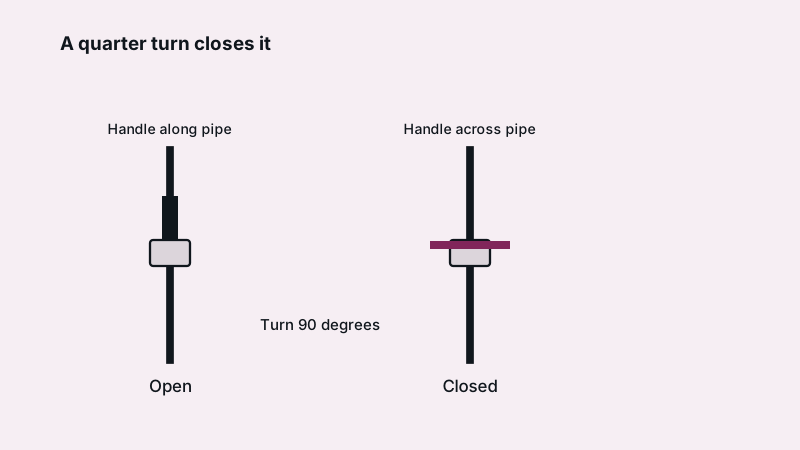
Your home has up to three layers of earthquake gas protection: the manual valve at the SoCalGas meter, an automatic seismic valve if someone installed one on your piping, and your own decision about when to act. The utility's own advice is to close the meter valve only when you smell gas, hear it hissing or spot some other sign of a leak. For pipework inside and around the house, see gas line plumbing, and visits start from the request form.
Details follow, including what we will not tell you to do yourself.
Should I turn off my gas after an earthquake?
Only with a reason: a gas odor, a hiss, a visibly broken line or appliance. SoCalGas advises against closing the meter valve otherwise, because getting service restored can mean a long wait when many customers lose gas at once. If you do close it, leave it closed and phone SoCalGas.
The sniff test decides it. A rotten-egg odor means nobody touches a switch and everybody walks out. Once outside, dial the utility at 1-800-427-2200; if someone feels unwell, the emergency operator gets the next call. SoCalGas also points out that a water heater or furnace vent can pull apart in a quake and release fumes, so check those once it is safe.
A faint odor after shaking might come from a torn flexible connector behind the range or dryer, a cracked fitting at the water heater, or a sheared stub in the garage. A homeowner does not repair any of those.
Where is my gas shut-off and how do I close it?
Locate the pipe feeding the meter, where the valve sits on the supply pipe. The utility's instruction is an adjustable wrench of 12 inches or more, and a single quarter turn until the handle lies across the pipe. Keep the wrench near the meter or in your emergency kit, not hanging on the gas pipe. Practice finding it in daylight.
SoCalGas stresses the next part: once the valve is closed, do not open it yourself. Call SoCalGas to turn the meter back on and relight pilot lights, because interior piping and appliances need to be checked for damage first. Expect waiting time after a large quake.
The meter and valve belong to the utility's side of the system. Anything after the meter, the house gas piping, is the owner's responsibility and falls to a plumber.
What does an automatic seismic gas shut-off valve do?
A seismic valve is a customer-owned device on the house gas line that closes by itself when it senses ground motion beyond a set strength, with no one at home needed. It stops gas flowing into the house piping while the utility's meter stays untouched. It does not detect leaks that occur without shaking and does not replace smoke or gas alarms.
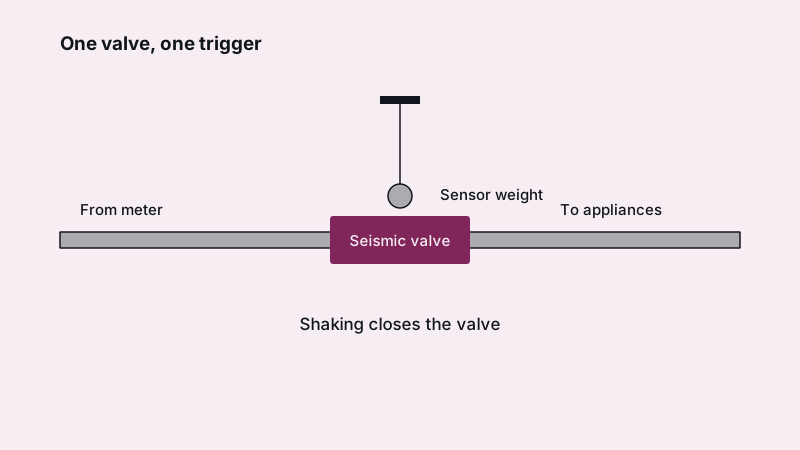
These devices act on the owner's piping, so installation is regulated work. Which model suits which house is a question for the installer, who should choose one that meets California's approval requirements and the city's rules. Ask the City of Mission Viejo Building Division whether a permit applies before installation, since gas piping changes commonly do.
Reset after a trip is device-specific. Follow the maker's instructions, or ask a plumber. Our page on resetting a seismic valve covers the general sequence without replacing the manual that came with yours.
Which kind of valve is right for a house in Mission Viejo?
For a typical home with gas to a water heater, furnace, range and dryer, a seismic valve at the house line is the usual choice when an owner wants automatic protection. The manual meter valve stays regardless. Tract homes from the 1970s to the 1990s often have rigid steel gas piping to the appliances plus flexible connectors, and those connectors are where quakes tend to do damage.
Sloping lots add a worry: moving soil can shear a buried line outside the house. An installer experienced in gas piping can say what is exposed on your lot and where a valve would sit. Gas pipe sizing, material and appliance connectors follow the residential gas piping codes that the city enforces, and flexible gas connectors have limits on length and placement.
Consider also your water heater: it should be strapped to the wall studs, a separate quake precaution that does not involve the gas valve.
Who is allowed to install a gas shut-off valve?
California puts gas piping jobs in the hands of a contractor with a suitable classification, working under a city permit. Owners may handle some jobs at their own house, but a gas pipe error means fire or explosion and the city inspects it, so we suggest not going alone. Valve installs are part of the wider gas plumber trade; ask for the paperwork and verify the credentials with the state.
A contractor license is required from $1,000 of work, and any deposit has a ceiling set by state rules, so a demand for a large payment up front deserves caution.
What will installing a seismic valve cost me?
The price depends on the device chosen, how easy the gas line is to reach, whether a permit and inspection are involved, and whether other piping work is found along the way. We do not publish a figure here we cannot source. Ask for a written quote listing the device model, labor, and permit fee, then compare it to the gas line cost guide.
Be sure the quote states whether the visit includes reset instructions and the paperwork for the permit. Keep the receipt and the product manual for the day you sell, since buyers and insurers sometimes ask.
What should I do after the shaking stops?
Check on people first. Then, if you suspect gas, follow the leak steps above. If there is no smell or sound, leave the valve open and listen and sniff at each appliance. Watch for broken water pipes, too: a quake that breaks gas lines can break water lines, and the water main valve is separate.
Check these places:
- The water heater: strapping, the vent connection, and the gas connector.
- The range and dryer: pull-outs can stress their flexible connectors.
- The garage wall and exterior meter area for a bent pipe or a loose valve.
- Crawlspace or attic piping, if there is one, for sagging or separation.
If a pipe or connector looks damaged, close the meter valve once the area is safe, phone SoCalGas, and afterwards ask us for a plumber. For help with an urgent situation read emergency plumbing.
Common questions
Seismic valve or excess flow valve: what is the difference?
Ground motion trips a seismic valve; a sudden surge of gas, as from a broken line, trips an excess flow valve. Because the triggers differ, a house may have either, both or neither. Whoever inspects your line can tell you what is installed.
Does the gas company shut off the gas for me after an earthquake?
Do not count on that. SoCalGas tells customers to close their own meter valve only on a smell, a hiss or another sign of a leak. It may take time for crews to reach every address after a large event, so knowing where your valve is, and keeping a wrench nearby, matters.
Can I turn the gas back on myself?
Not the meter valve, says SoCalGas, which says only its field employees turn it back on. Contact them to restore service and relight pilots, so house piping and appliances get checked for damage before gas flows again. A tripped seismic valve may be resettable following its manual, but have the system examined first.
Do I have to have a seismic valve?
No confirmed statewide rule forcing one onto an existing home turned up, and requirements can vary by city and project. Phone the City of Mission Viejo Building Division, or the building office where you live, for what applies to your address.
Who comes first, the utility or a plumber?
The utility comes first, since it can close supply at the meter and survey the area; a plumber handles the repair afterwards, once gas is confirmed safe. Anyone endangered or unwell needs emergency services right away. Never wait for a plumber's arrival before getting people out.
See plumber across Mission Viejo for the other services and what they cost.
Sources
Updated