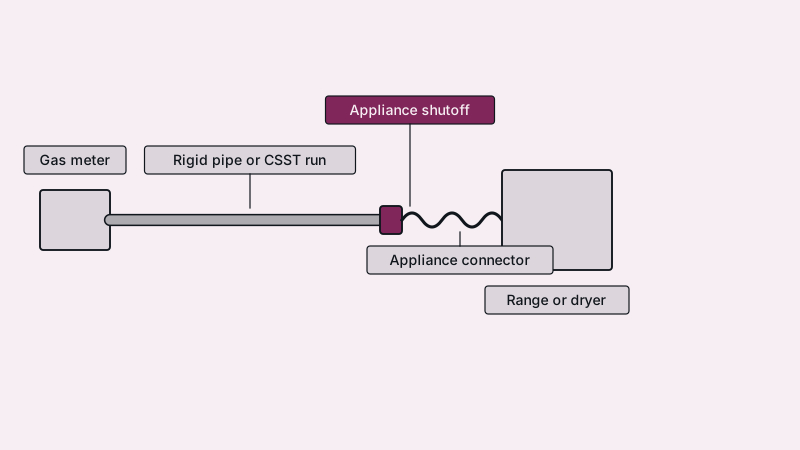
"Half-inch flexible gas line" usually means one of two products. The first is a short appliance connector, a flexible tube a few feet long that links a dryer, range or water heater to a rigid pipe. The second is corrugated stainless steel tubing, called CSST, which can run through a house as the gas supply itself. The first is a replaceable part; the second is gas piping and a permit job. Which one you have decides what you may do yourself, and the gas line service page describes the work from our side. Booking a visit begins at our quote page.
What counts as a flexible natural gas line?
Two products share the name. The appliance connector is a short run of tube with fittings already crimped on both ends. Wikipedia says these come in lengths of 1 to 6 feet, with no plastic sheath. CSST is longer tubing in a protective jacket that serves as building gas distribution.
CSST is described there as an alternative to traditional black iron pipe: its wall is thinner, it needs fewer joints, it may fare better in earthquakes, and it may be easier to install, but it costs more than black iron. Both types carry gas, and neither is a hose to improvise with.
Is a half-inch line big enough for my appliance?
That turns on the appliance and the distance. Half an inch fits one modest load over a short run, a dryer or a range for example. A tankless water heater or furnace asks for much more, and a long run costs capacity. Sizing is done from the manufacturer's tables, the BTU load and the length, not by eye.
An undersized line starves an appliance, which can cause poor burning. Sizing therefore belongs to a plumber. Why a big heater often forces a larger line is explained in gas tankless installation.
Which pipe materials carry gas inside a house?
Inside houses, the common materials are black iron pipe, which is threaded steel, and CSST. Appliance connectors link the last few feet to the machine. Utility service lines underground to the meter are typically plastic or steel, and are owned and run by the gas company.
Which material a house has depends on its age and who did the work. Houses from the decades when Mission Viejo grew fastest often have steel pipe inside, and CSST turns up more in newer or remodeled work. Do not guess the material by sight. If you see yellow-jacketed tubing, it is probably CSST.
What does CSST need to be installed safely?
Wikipedia says yellow-jacketed CSST is non-conductive and the most common, and that it is alleged to carry a higher risk of lightning-related fires than black iron. Many local codes require bonding of yellow-jacketed CSST to the electrical panel's ground, and installers keep it away from metal ducts and pipes and away from sharp objects like screws and nails.
Because of that, CSST should be put in by someone trained on the manufacturer's system, and inspected. The page also says buildings with CSST should be inspected by qualified people, and homeowners should check what their insurer requires. If you are unsure whether your house has bonding, ask a plumber to look.
Can a homeowner swap an appliance connector?
Many do, yet gas work is regulated and the safest course is a plumber. Anyone doing it personally should close the valve at the appliance, use a connector rated for that appliance, and check the joint for bubbles with soapy water afterward.
Never hunt for a leak with a flame. Old connectors do not move to new appliances either, because the fittings wear. A smell of gas at any moment means stop.
What is the first move when gas is in the air?
Walk everyone out. Once you are in the yard or street, phone SoCalGas at 1-800-427-2200, and use 911 when someone may be injured or property is at risk. The utility's advice: no smoking or flames, no switching of lights or appliances, and no attempt to stop the leak or fix a pipe or meter.
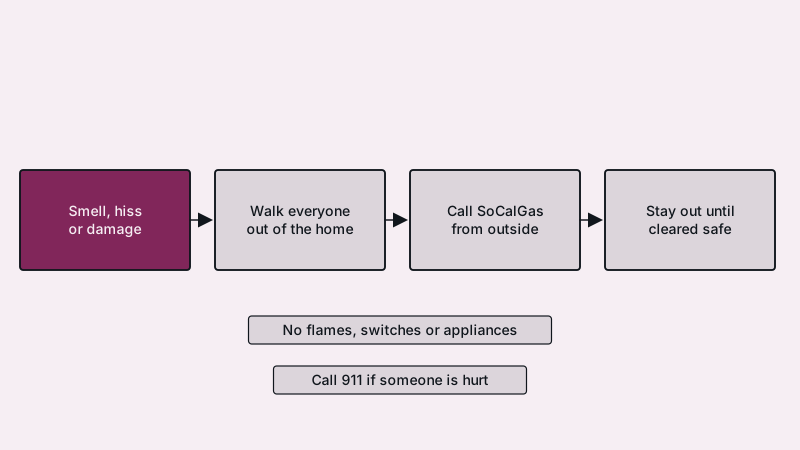
SoCalGas also warns that smell alone is unreliable, since odor can fade or your nose may be dulled. Hissing and visible damage at a connection are other signs. Stay out until the utility clears the building.
How are exterior lines and burial depth decided?
Numbers hang on the code edition, the pipe material and local amendments, so a single depth that fits every job would only be a guess. Outdoor pipe is meant to be shielded from knocks and corrosion, and buried pipe carries a depth and marking rule that the code sets and the inspector verifies.
Ask Mission Viejo Building Services, which takes permit applications and inspection bookings online and answers questions at 949-470-3054. The residential gas piping codes page lists what the code covers. SoCalGas owns the meter and what feeds it.
Does a manufactured home change the picture?
Yes. Manufactured homes carry their own gas connection requirements, and the pipe often runs beneath the floor, exposed to damage and corrosion. The regular rules on permits and contractors still apply, and the connection point to the utility is separate.
A plumber can inspect the existing line, test it for leaks, and replace sections. Our page on plumbing under a mobile home covers the structure, and the earthquake valve is covered under gas shutoff valve for earthquakes.
Who may legally install gas piping here?
Just a contractor with the proper state credential, which rules out a handy neighbor or a weekend DIY effort. The contractor board lists plumbing under classification C-36, and Mission Viejo sends gas work through a permit and an inspection as well, so the paperwork trail starts before the first pipe is cut.
Look up the license number before you agree. Details sit in the permits and gas work guide.
Common questions
Which pipe usually carries gas in a house?
Black iron pipe and CSST are the two common types inside homes, with flexible appliance connectors for the last few feet. Underground utility lines are often plastic or steel and belong to the gas company. The material in your house depends on its age and past remodels.
How deep does a buried residential gas line go?
That varies with pipe material, code edition and local amendments, so there is no one figure to quote here. The code sets the depth and the inspector checks it. Ask Building Services before digging, and call 811 to mark underground utilities.
What rules cover an outdoor gas line?
Outdoor pipe has to be protected against damage and corrosion, supported properly and pressure tested before it carries gas. Details differ by code edition and by city, which is why the inspector has the last word on a given job. Expect a permit and inspection, with a state-credentialed contractor doing the work.
Can an owner run gas piping in a mobile home?
Generally no. California regulates this trade, and a manufactured home adds its own connection rules on top of the usual ones, so a credentialed contractor should do the work under permit and inspection, after a leak test and before the gas is switched back on.
For the wider picture, start with Capistrano Plumbing.
Sources
Updated