A repipe means the supply lines that carry water to your taps, showers and appliances are replaced from the main shutoff to each fixture, typically PEX or copper. It makes sense for pipes that keep springing leaks, for polybutylene or galvanized lines, and for rusty water. Published guides put an ordinary single-family job in a wide band from the low four figures up to around fifteen thousand dollars, though only a plumber who has walked the house can name the real figure. See the Capistrano Plumbing home page for the whole service, or jump to the quote form.
What happens, in order, during a repipe?
A plumber maps the old lines, shuts the water off, opens small access holes in drywall, runs new pipe from the main to each fixture, reconnects the taps and the water heater, then pressure tests the system. The city usually inspects the work. Patching the holes and repainting are separate trades, so ask early who handles that.
In plainer sequence:
- A walk-through to count fixtures, find the shutoff, and decide where the new lines can run through attics, garage walls or crawlspaces.
- A written quote and a permit application.
- Water off for the working day or days; many crews supply a temporary tap.
- New lines in, old ones abandoned or removed.
- Pressure test, inspection, then water back on.
- Drywall patching, which may be a separate quote.
The step-by-step repipe walkthrough goes deeper on prep, such as clearing cabinets under sinks.
What does a mid-size 1,500 sq ft home run?
Published guides put PEX at about $3.50-$7 per square foot installed, and one California contractor guide describes $9,000-$15,000 for a standard single-family house, so Mission Viejo bids may sit at the high end. The written quote sets your price. Copper roughly doubles materials and labor.
These are guides, not quotes. What moves the number:
| Factor | Pushes the price |
|---|---|
| Pipe material | Copper runs far above PEX |
| Number of bathrooms and floors | More fixtures and longer runs raise it |
| Access | Slab homes, finished ceilings and tight attics add labor |
| Drywall and paint | Often priced apart from the plumbing |
| Permit and inspection | A fee set by the city, plus the plumber's time |
Material-by-material numbers sit in the PEX repipe cost breakdown, with the wider picture on the repipe cost page. Surprises hiding in drains and fittings of older houses are discussed under old house plumbing replacement.
Where can you save without cutting corners on a repipe?
Stay with PEX, keep the layout as it is, and choose a house where the attic or garage gives easy access. A partial repipe of only the failing branch costs less than a full one but leaves the other old pipe in place. The cheapest quote is rarely the cheapest result if the leaks continue next year.
Savings worth asking about:
- PEX over copper. Fewer joints, flexible runs, lower material cost.
- One trade, one mobilization. Doing the repipe alongside a bathroom remodel avoids opening walls twice.
- A partial job. A single branch, such as the kitchen and one bath, if the rest tests sound.
- Your own patching. If you can handle drywall repair and paint, the bid can leave that out.
Compare bids on the same scope, with the same fixture count and the same finish work, or the figures mean nothing.
Does repiping pay off in an older home?
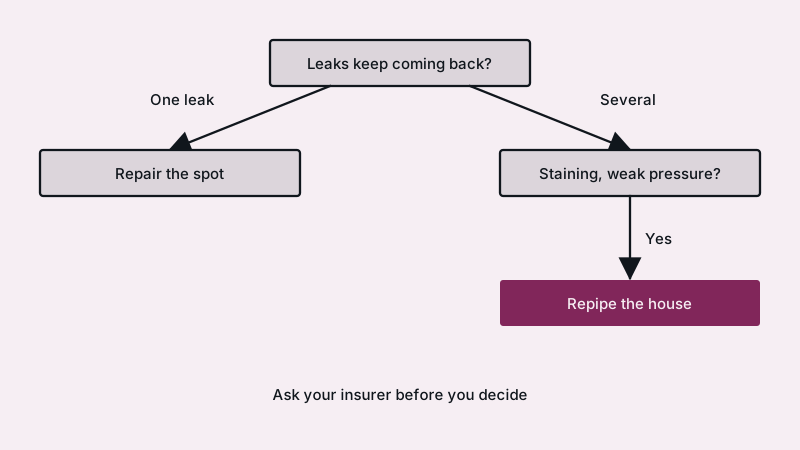
It tends to pay off when leaks have become a pattern, when the pipe is a known problem type, or when your insurer will not renew with it in place. A single pinhole is a repair. Three in two years, plus staining and weak pressure, says the system is at the end. Repipes also remove the guesswork from selling the house later.
Signs it is time:
- Repeat pinhole leaks in copper, often green crust at fittings.
- Brown or orange water after the line sits unused.
- Pressure dropping across the house over the years, not just at one tap.
- Polybutylene or galvanized lines confirmed on inspection.
For one failing line, the reasons to repipe article helps weigh repair against replacement. Tract homes in South Orange County were built across several decades, so a house from the 1970s and one from the 1990s may need very different answers.
Which pipe types are the real troublemakers?
Two names dominate: polybutylene and galvanized steel. The first is gray plastic piping installed in many US houses from around 1978 until roughly 1995; it tends to fail where fittings join, and some insurers decline or surcharge homes that still contain it. Galvanized steel corrodes from inside and chokes flow.
Others to know about:
- Copper with pinholes. Pinhole leaks can come from aggressive water or pipe wear and spread through a system.
- Lead solder and old lead pipe. Homes built before the mid-1980s can contain lead-bearing solder. If the plumber finds lead pipe, ask how it will be handled and removed.
- CPVC. Gets brittle with age and heat, depending on the product.
Dedicated guides cover polybutylene replacement and galvanized pipe replacement.
What is the plumbing system in a house, and what does a repipe touch?
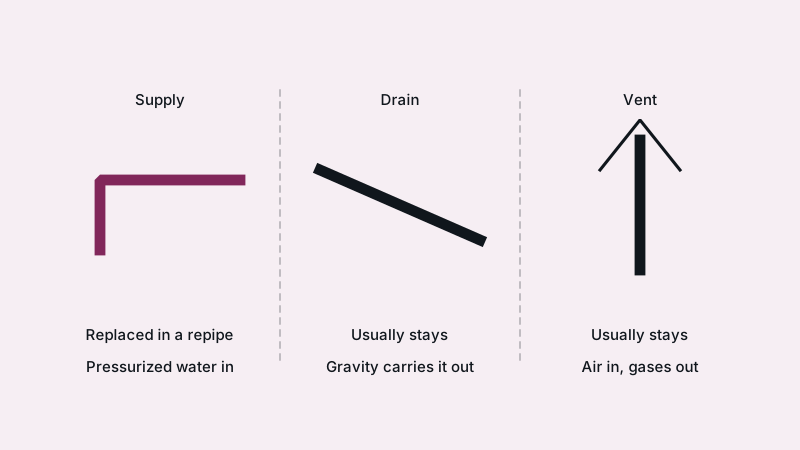
A house has three systems: supply pipes that bring pressurized water in, drain lines that carry wastewater out by gravity, and vents that let air in so drains flow. A repipe replaces supply lines only. Drain and vent pipes, which are bigger and run at an angle, usually stay unless a separate problem is found.
The supply side includes the house shutoff, branches to hot and cold fixtures, valves under sinks, and the connection to the water heater. If the home sits at the low end of a hillside tract with strong street pressure, a regulator may sit near the main. A regulator is compulsory in California where static pressure exceeds 80 psi, and a tired one can look just like a failing pipe.
Is a do-it-yourself repipe realistic?
A homeowner can pull a permit in California to work on their own home, and a handy person can do PEX with the right tools. The catch is that Mission Viejo expects a permit plus inspection, and a single bad crimp in a wall means a flood. Gas lines and anything involving the main are better left to a contractor.
Hiring out? Any bidder needs a state contractor license at the $1,000 mark, or for permitted work of any size. A deposit has a legal ceiling: a tenth of the contract or a thousand dollars, whichever is lower. CSLB offers a public license search.
Common questions
Can you still put copper pipes in your house?
Yes. California's plumbing code allows copper, and plenty of homeowners choose it for its long track record. Expect higher cost and slower installation than PEX, and aggressive water can eventually pit it. Both materials are accepted by inspectors, so the choice is about budget, water quality and preference. See the PEX versus copper comparison.
How long does repiping take?
Estimates vary. Many guides mention a day or three for PEX and longer for copper, and the water shuts off for part of the workday. One story and attic access make it quick; two stories and finished ceilings slow it. Drywall patching and paint follow and can stretch the total, so get the plan on paper.
How do I know the pipes are finished?
Not necessarily. The signs are polybutylene or corroded galvanized pipe, leaks that keep coming back, or an inspection saying so. Newer copper or PEX in good condition usually does not need it. Pressure tests and a look at exposed runs let a plumber call it a repair or a replacement.
Does the city need to approve a repipe?
Yes, through its Building Services Division, which issues plumbing permits for repipes and inspects the result. The plumber normally files the application and books the inspection. If a bidder offers to skip the permit and save you money, that says something about the rest of the work.
How should two repipe bids be compared?
Line them up on the same terms: license number, pipe type and brand, number of fixtures, drywall patching, permit handling and payment schedule. Add the hours without water. Ask each bidder what changes if a hidden problem appears once the walls are open.
More in this guide
- Galvanized pipe replacement
Rusty water or weak flow from old steel pipe?
- How a repipe is done
How a whole-house repipe is done in Mission Viejo, day by day, with PEX or copper, in a slab or crawlspace home, what it costs and what…
- PEX repipe cost
What a whole-house PEX repipe costs around Mission Viejo in 2026, how copper compares, what polybutylene homes pay, and why published…
- Repiping and pipe replacement
PEX or copper for a repipe? Compare cost drivers, flow, lifespan, sunlight and cold limits, and what suits older Mission Viejo tract homes.
- Repiping
Polybutylene (Poly-B) pipe replacement for Mission Viejo homes: how to spot it, why it fails, repipe cost with PEX, partial vs full,…
- Repiping
What a whole-house repipe costs in Mission Viejo: PEX vs copper, price per fixture and per square foot, permits, wall repair and a…
- Repiping
Why repipe a house in Mission Viejo: polybutylene, pinholing copper, galvanized rust and low pressure, plus how to tell a repair from a…
Sources
Updated