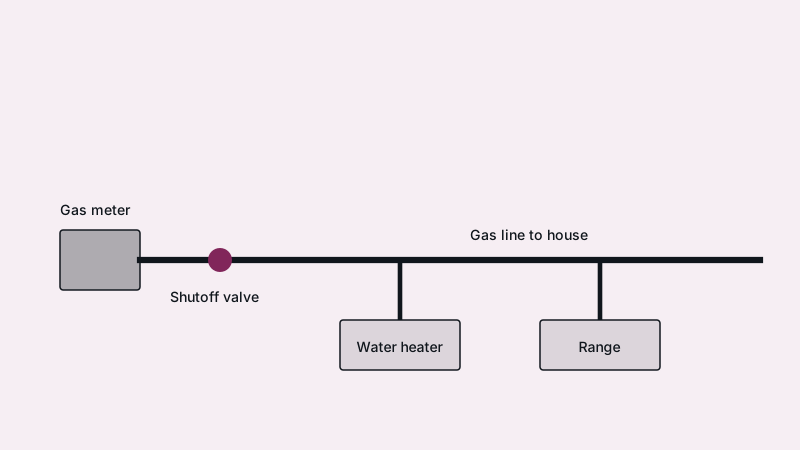
Yes, a plumber can run, move, cap and repair a gas line, and in Mission Viejo that is the normal route for a new stove, dryer, fireplace, grill or outdoor fire pit supply. Through Capistrano Plumbing, a plumber from nearby visits, walks the route with you and prices the job on paper. Gas is also where homeowner DIY ends, and the permit conversation starts early.
Can plumbers put in gas lines?
Yes. Federal labor statistics list gas piping among everyday plumber tasks in houses and commercial buildings, next to water and drain lines. Whoever does it should hold a California contractor license, and the city normally inspects the work before gas flows. Ask to see the license number and the permit.
On a typical run, the plumber works out pipe size from the meter outlet to the appliance, picks a material, threads it through wall, attic or yard, fits a shutoff at the appliance, then tests the finished line under pressure. The inspection is the part homeowners forget. Mission Viejo handles permits and inspections online, and Building Services can be reached on (949) 470-3054 with questions.
What type of contractor installs gas lines?
Mostly plumbing contractors. Heating and air contractors also run gas to furnaces, and general contractors on a remodel often subcontract the gas to a plumber. What counts is a California contractor license for the trade. CSLB's website lets you search it and compare the result with the number on the contract.
For a house project, ask one more question: who pulls the permit. CSLB says a contract should state who will get permits, along with a payment schedule and a completion date. If the answer is "you will" and the job is a gas line, slow down. The permit is the contractor's to carry, and the inspection record is what a future buyer or insurer asks for.
Is gas piping something every plumber does?
Many do, but not all, and the difference shows up in the questions they ask. A plumber who does gas work will ask the appliance's BTU rating, the distance from the meter, the existing pipe size and whether the new load changes the capacity. If those questions do not come up, find someone else for this job.
Gas piping has its own pipe materials, joints and testing rules. The residential gas piping codes page explains what the code looks at, and the gas plumber checks page covers vetting. Half-inch flex connectors are common behind appliances, and the flexible gas line guide explains where they fit.
What jobs fall under gas line work at a house?
Typical requests: a range or stove line, a dryer line, a gas log set, supply to a grill or a fire pit, a water heater connection, a relocated meter-side shutoff and capping a line left from a removed appliance. Repairs, such as replacing a corroded connector, count too. Each has its own pipe length and permit question.
Plain notes on the ones people ask about:
- Stove or range: a new gas stove in a kitchen that only had electric needs a run from the nearest gas point, plus a shutoff behind the range.
- Fireplace: a gas log set needs a line, a shutoff and a clearance check. A plumber does the line, and a fireplace specialist may do the unit.
- Capping: when an appliance is removed, the open end is closed with a cap by a contractor, never left on a valve alone.
- Moving a line: a plumber reroutes, then pressure tests and passes an inspection before the old route is removed.
- A hit line: a plumber who nicks a gas pipe, or a homeowner who does while digging, should leave the area, and call SoCalGas from a safe spot at 1-800-427-2200.
SoCalGas's leak guidance says to leave repairs of pipe or meter alone, and to call 811, a free service, before any digging.
How much does a gas line cost?
Bob Vila puts the national average for a gas line installation near $558, within a usual spread of $120 to $1,350, and a whole-house replacement at $3,000 to $7,000. It lists appliance connections near $20 per linear foot, permits at $100 to $300 and a plumber's hour at $45 to $200. These are national figures, so the written quote sets your price.
Longer routes, trenching, a buried line and crawl-space access push costs up. Our gas line cost article itemizes it. Only the written quote is binding. Meters are set by the utility.
Where does the seismic shutoff valve fit in?
A seismic valve is its own device, sitting on the house line and closing it in strong shaking. SoCalGas states that customers must hire a qualified professional to put one in, that SoCalGas will not install one for you, and that only it or its contractors may operate the shutoff at the meter. More is on the earthquake valve page.
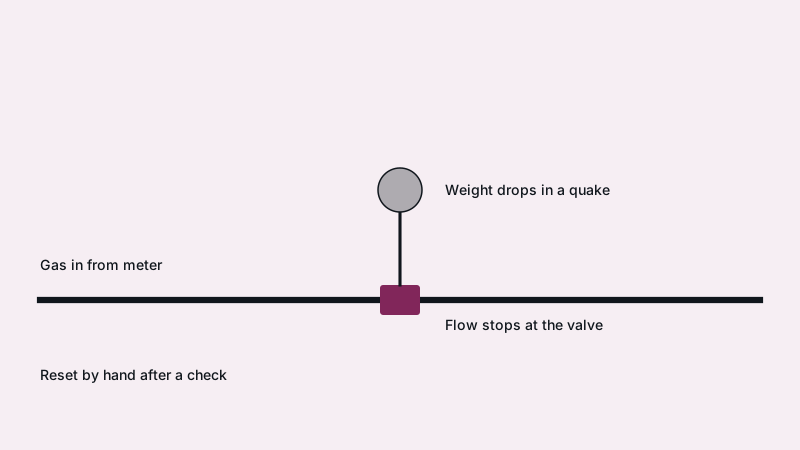
After a trip, the maker's instructions govern the reset, and SoCalGas still advises a qualified person to check appliances for leaks before pilot lights come back on. The reset guide walks through it.
How do I spot a dodgy gas plumber?
Four flags: a quote with no permit line, a deposit above the legal cap, a reluctance to show a license number, and pressure to start today. A sound contractor is relaxed about writing down scope, price and permit owner, and about you checking the license.
Ask what deposit is being requested, because the state sets a ceiling lower than many people expect. The license exemption is also narrow, covering only small jobs with no employees and no permit, which rules out an inspected gas line.
Is there gas in the air as you read? Close this page and go outside, touching no switches. Phone SoCalGas from the sidewalk. If people could be hurt, dial 911 as well.
Common questions
Can a pipefitter do plumbing work?
Sometimes. Federal labor statistics place pipefitters mostly in factories and big commercial buildings, on lines carrying chemicals, acids and gases. For a house, California still wants the right contractor license behind the work, so verify the number, not the job title.
Who earns more, pipefitters or plumbers?
The trades overlap, and pay varies by region and specialty. One federal median, $63,800 a year for May 2025, lumps plumbers, pipefitters and steamfitters together, so it cannot answer the question for a Mission Viejo job. Compare written quotes from the people who would actually do the work.
What is the highest paid type of plumber?
No official ranking exists, and the federal data lumps the trades together. High-pressure specialists such as steamfitters are often assumed to earn most, but we found no published source proving it. Homeowners can ignore the debate: the quote on your table is what you pay.
Can I connect my own barbecue to the gas supply?
Not the pipe. New gas piping is contractor work with a permit and a pressure test behind it. You can pick the grill and its spot. The line, fittings and shutoff go to a contractor, and anyone digging first calls 811, which SoCalGas lists as a free service.
More in this guide
- 1/2 inch flexible gas line
What a 1/2 inch flexible natural gas line can feed, how CSST differs from black iron and appliance connectors, and what Mission Viejo…
- Earthquake gas shut-off
Meter wrench, seismic valve or excess flow valve?
- Resetting a seismic valve
Your seismic gas valve tripped. Check for a leak, follow the maker's reset steps, know what only SoCalGas may touch, and see when a…
- Gas line cost
Gas line prices in Mission Viejo for 2026: appliance hookups, new runs per foot, pipe types, permits and earthquake shutoff valves, with…
Sources
- Wikipedia, Natural gas
- Wikipedia, Plumbing
- SoCalGas, recognize a natural gas leak
- SoCalGas, earthquake and excess flow valves
- US Bureau of Labor Statistics, plumbers, pipefitters and steamfitters
- Bob Vila, gas line installation cost
- City of Mission Viejo, Building Services
- CSLB, learn about home improvement contracts
Updated