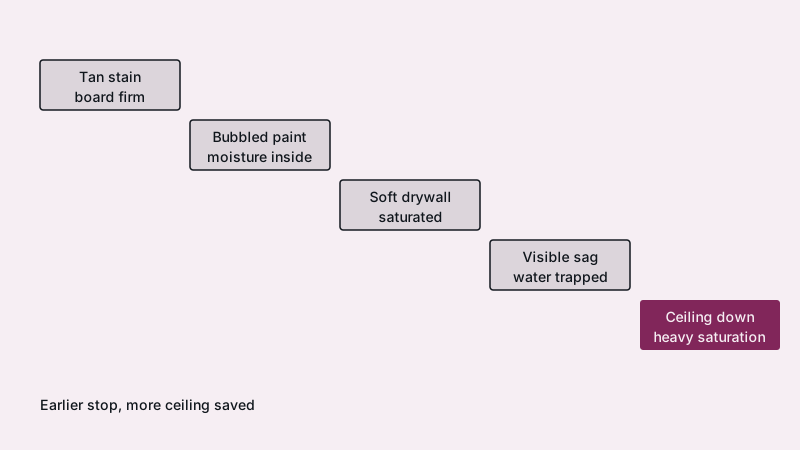
A wet ceiling gets worse in a predictable order: a tan stain, then bubbling paint, then soft drywall, then a sag that holds water, and finally a collapse. The earlier you stop the source, the more of the ceiling survives. Cutting off the water supply comes before any repair, and finding the pipe is the plumber's first task. The source side of the problem belongs to leaks and burst pipes; this page deals with the damage that is left behind.
What does each stage of ceiling water damage mean?
A faint stain with firm drywall means a small or past leak that can often be dried and painted. Bubbled paint and a soft spot mean the board has absorbed water and likely needs cutting out. A sag means water is trapped above and must be released and the source stopped. A collapse means immediate danger from falling material and water.
The stages at a glance:
| What you see | What it suggests | What usually follows |
|---|---|---|
| Tan or brown ring, board firm | Small leak, maybe stopped | Find the source, dry, prime, paint |
| Paint bubbling or peeling | Moisture in the board | Dry, then replace the damaged patch |
| Soft or crumbling drywall | Saturated board | Remove the bad section and fit new board |
| Visible sag or bulge | Water pooled above | Puncture to release it, stop the supply, replace the board |
| Part of the ceiling down | Heavy saturation | Clear safely, stop the water, rebuild |
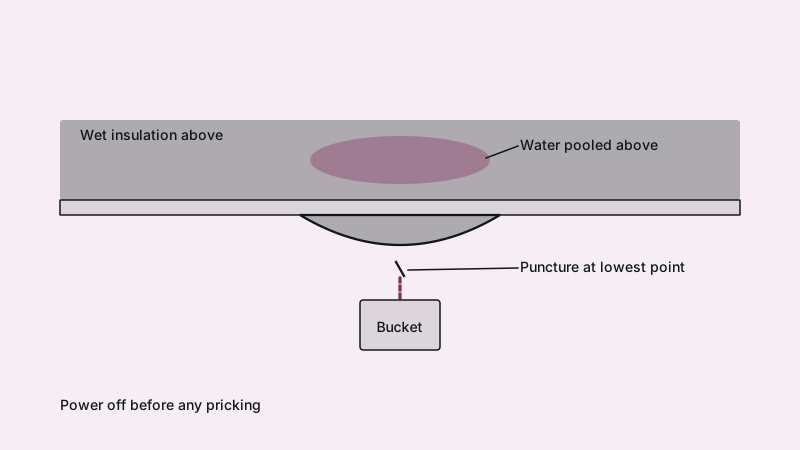
If the ceiling is sagging and wet, stay out from beneath it. Pricking the sag at its lowest spot lets trapped water run out gradually into a bucket, but only after the supply is closed and with no wiring close by.
How do you make the area safe first?
Shut the supply to the suspect line, kill the breaker for circuits serving that ceiling if water is near light fixtures, and get people and belongings out from beneath the wet patch. Next, catch drips, take photographs and phone a plumber. Wet wiring calls for an electrician, and for emergency services if anyone is endangered.
Ceiling light fixtures that hold water are a shock and fire concern. Do not use switches under a wet ceiling. A wet attic or a second-floor bathroom is the usual source, so the plumber will often start there. For the diagnostic side, the page on signs of a water leak in a ceiling helps locate it, and a ceiling stain with no active leak covers old marks.
How long can a soaked ceiling stay wet before mold starts?
EPA's mold and moisture guidance sets the target at drying wet drywall and insulation inside one to two days, or growth can begin. Fans, a dehumidifier and opened cavities all help. Anything still wet after that, or smelling musty, is better removed than dried.
Do not assume a dry surface means a dry ceiling. The top side of the board, the insulation above it and the framing can hold moisture after paint feels dry. A moisture meter, which restoration companies use, tells you what a hand cannot. EPA observes that soft, absorbent surfaces, ceiling tile among them, are often thrown away once mold settles in, because thorough cleaning is hard.
Is the ceiling safe to open or scrape in an older house?
Check first. A textured or popcorn ceiling in a house built before roughly 1980 may contain asbestos, and the eye cannot tell. Water can loosen the material. Have a sample tested before anyone scrapes, sands or cuts into it. California regulates asbestos work, and CSLB's consumer asbestos guide says who may do it.
Mission Viejo was built out as a planned community from the 1960s onward, so a good share of its older homes were built in the years when textured ceilings were common. A lab test on a small sample costs far less than an abatement mistake, and a restoration company or the plumber can tell you who to ask. Do not vacuum or sweep dry debris from a suspect ceiling.
Who repairs a water-damaged ceiling, and what does it cost?
One trade fixes the pipe; another fixes the plaster. A drywall or restoration contractor dries, removes and replaces the damaged ceiling, then textures and paints. Fixr lists ceiling water damage repair at $200 to $1,500 nationally, more for big or textured ceilings; plumbers seldom fold it into their quote.
Ask who does what before work begins:
- Plumber: finds and mends the leak, opening the ceiling where the pipe demands it.
- Restoration or drying company: extracts water and dries the structure after a larger leak.
- Drywall contractor: replaces the board, tapes, textures and sands.
- Painter: primes with a stain-blocking primer and paints the full ceiling plane so patches do not show.
A sudden leak may be covered by insurance. Read the policy before work starts, photograph everything and keep invoices; typical wording is in what insurers pay after a burst. Tracing a hidden source is priced in the leak detection cost guide.
When should the plumber come before the drywall person?
Always before. Patching a ceiling beneath a live leak throws money away. Find and fix the source, let everything dry fully, and only then do the cosmetic work. Check the contractor's license on CSLB's lookup before agreeing; the state requires one from $1,000 of work or for permitted plumbing jobs.
A visit begins with the quote form, where you outline the damage; the written price arrives before the plumber starts. Browse everything else on the Capistrano Plumbing home page.
Common questions
How long from leak to painted ceiling?
The pipe fix may be one visit. Drying takes days. Cutting out, taping, texturing and painting add more, since joint compound and primer need time between coats. Large or textured ceilings take longer, so expect a week or more overall and ask each trade for its own timeline.
Can a coat of paint cover the stain?
Wait until the pipe is mended and the ceiling is thoroughly dry. Stain-blocking primer stops the mark bleeding through, but painting over a wet or moldy ceiling just hides trouble. Soft, cracked or bubbling board should be replaced instead, and a lingering musty smell means something is still damp behind the paint.
Must I be home for the ceiling work?
For the first plumbing visit, yes, to open up the space above the damage and approve the plan. Drywall and paint stages can be arranged with the contractor for access. Expect dust, move furniture out of the room, and cover what cannot be moved, because sanding drywall compound spreads fine powder.
What goes into a sound ceiling repair bid?
It names the contractor license, confirm the leak is already fixed, explain how asbestos is handled in an older home, say who matches the texture and state the price. For big damage, add who dries the structure and with what equipment.
Will the stain come back?
Not if the leak is fixed and the ceiling dried properly. A returning stain tends to mean the source was only partly fixed, or moisture stayed in the insulation or framing. Check the area after the next rain and after heavy use of an upstairs bathroom. If the mark grows, call the plumber back.
Sources
- Fixr, Ceiling Repair Cost
- EPA, A Brief Guide to Mold, Moisture and Your Home
- Contractors State License Board, asbestos guide for consumers
- Published ceiling and drywall repair cost guides, compared November 2026
- Contractors State License Board
Updated