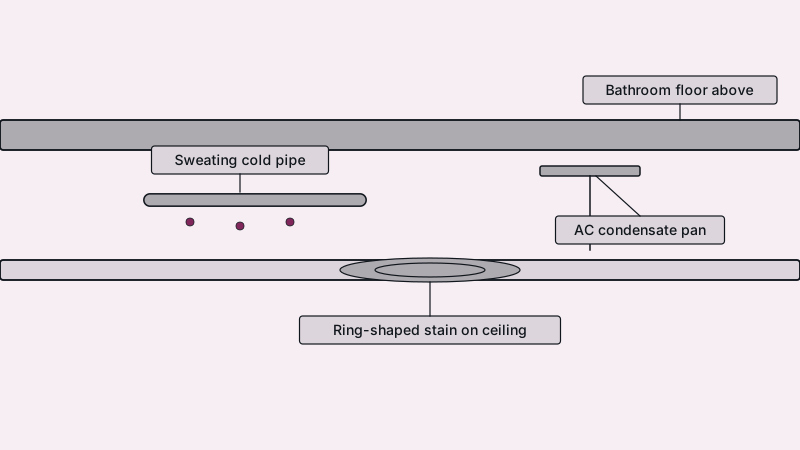
A dry stain is either history or a slow leak that only shows when conditions line up: rain, a shower upstairs, the air conditioner running. Find out whether it is spreading before assuming either. Outline the edge in pencil, write the date, and revisit in a few days. Growing or damp means call for help, and the leak plumber page shows how that goes.
Is this stain a leftover or a leak in progress?
Touch it with a clean fingertip. Cool, soft or clammy drywall means moisture is present now; dry, hard and unchanged suggests the past. Trace the edge in pencil with a date, then recheck after the next rain and a few showers. Growth past the line, or darker edges, mark an active source. A cheap moisture meter reads it more clearly.
Rings matter. A stain with several concentric rings, like tree growth, has been wetted and dried many times, which points to an intermittent source such as roof flashing, an air conditioner drain, or a tub overflow. A single, even patch is more likely one event, such as a past supply-line leak that was repaired.
A bulge or sag means the drywall is holding water and could drop. Stay clear of the area below, set a bucket down, and let it drain through a small hole punched at the lowest point. Turn off the circuit if a light fixture is close. A sagging ceiling with active water counts as urgent.
What household sources cause a stain with no visible leak?
The common ones are an air conditioner condensate line or drain pan overflowing in the attic, a sweating cold pipe or duct, a bath fan duct dripping condensation, roof flashing that leaks only in a hard rain, and a bathroom above with a failing shower pan, tub overflow gasket or toilet seal. Each leaves a stain without a steady drip.
In southern California the attic air handler is a prime suspect. Cooling season produces condensate that drains through a line, and the pan beneath the coil catches overflow. A clogged line spills water into the ceiling below on hot days and then stops. Cleaning the line, or a float switch, is a job for an HVAC service rather than a plumber, so rule it out first when the stain sits under an attic unit.
Pipes also matter. A pinhole in an aging copper line, which older tract homes can have, may weep a few drops at a time, under pressure, mostly overnight. The pinhole leak guide explains why those start, and local conditions such as hard water and high pressure play a part. A regulator tames high meter pressure; see setting a pressure regulator.
What test shows whether a supply pipe is leaking?
Use the meter. Switch off every tap, appliance and sprinkler, write down the reading on the water meter, leave it two hours with no water used, then read it again. EPA guidance says any change likely signals a leak. A moving dial points to a supply-side leak, and a still dial points away from supply pipes toward drains, roof or air handling.
Check which fixture sits above the stain. Run the shower upstairs for ten minutes with the drain closed, and watch the ceiling below, then test the toilet and tub overflow. Also run the air conditioner for an hour and look at the stain. This simple elimination often finds the source without opening a wall.
More clues to watch for are listed on the signs of a ceiling water leak page.
Could it be condensation, not a plumbing leak?
Yes. Warm humid air meeting a cold surface drips. Uninsulated cold water lines, air conditioning ducts and bath fan ducts in an attic can all sweat, and the stain forms under them. Condensation stains tend to appear in warm months, show up in lines that follow the duct or pipe, and can be fixed by insulating the surface or fixing a poorly sloped fan duct.
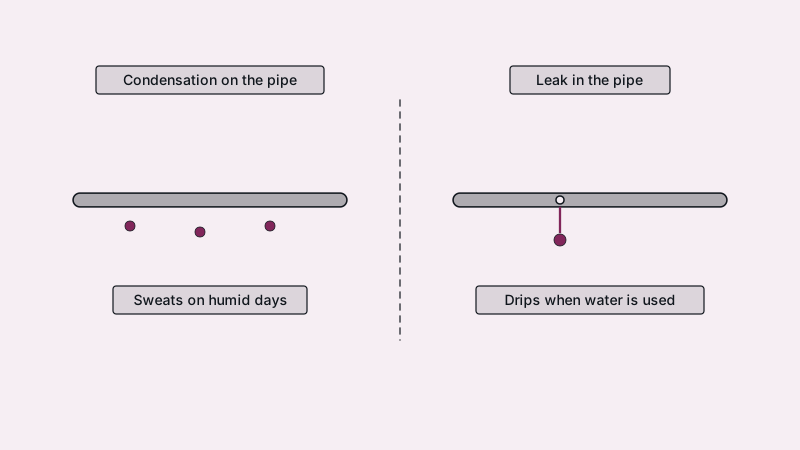
A clue is timing. A condensation stain darkens on humid days and dries in cool weather, while a plumbing leak follows when water is used. A roof leak follows rain. If it follows none of these, an old repair may have been patched over, or insulation above may be wet from a previous event.
At what point does a ceiling stain become urgent?
Urgent means the ceiling sags, drips, sits beneath a light fixture or smells musty. Kill the circuit, shut the main if a supply line is suspect, and take photos for the insurance claim. A dry, stable stain can wait for an ordinary appointment. A fast-growing one cannot.
The main water shutoff in many Mission Viejo tract homes is often by the meter, out front or at the side, so learn where yours is now. If the stain follows a burst or sudden failure, see burst water pipe and repairing a damaged ceiling for repair and drywall. Whether a policy responds is on insurance and burst pipes.
Common questions
Is mold a worry with a ceiling stain?
It can be. Wet materials can start growing mold within a day or two, and a musty smell or dark speckling hints at it. Dry the spot, fix the source, and consider an inspection if the stain is big. A small, dry, old stain without odor is usually cosmetic. Do not scrub a damp stain with a sprayer, since that adds water.
Will painting over it hide the problem?
It hides the color, not the cause. Brown tannin stains bleed through ordinary paint, so use a stain-blocking primer after the spot is completely dry and you are sure the source is fixed. Painting before you find the source risks sealing in moisture and hiding a spreading stain.
What does hunting down a hidden leak cost?
Published leak detection guides show a range from a service-call fee up to several hundred dollars for acoustic or thermal tracing, with wall or ceiling opening extra. A quote should name the method and what repairs are included. The leak detection cost page explains typical figures.
Is a stain below a bathroom always a shower problem?
No, though it is a good first guess. Tub overflows, a loose toilet flange, a supply line to the sink and cracked drain fittings all drip into the ceiling below. The key test is running each fixture separately while watching the ceiling, which shows which one carries the leak.
Is a permit needed for the repair?
Drywall and paint repairs usually do not need a permit, while replacing or rerouting pipe in the wall can. If a plumber opens the wall and repairs a pipe, confirm with the city's Building Services Division whether the work needs one.
This guide is one of many on Capistrano Plumbing.
Sources
Updated