Suspect a burst when wet patches appear that have no business being there, or when the meter dial creeps along with every faucet closed. A wall that hisses, a floor that is oddly warm and drywall gone soft all tell the same story. If water is flowing as you read, jump to the ten-minute checklist further down. Bursts belong to the wider topic of leaks and burst pipes; this page is about telling a genuine break from a slow weep.
Is it a burst, or only a drip?
A true burst moves plenty of water quickly. Watch for a dial that turns while every faucet is closed, several taps losing force together, a stain that visibly widens over an hour, or the sound of running water inside a closed wall. A slow weep at one fitting stays local, stays the same size and rarely affects pressure elsewhere in the house.
Sort what you notice into three bins:
- Ears. A hiss, a trickle or low rushing while the dishwasher and ice maker sit idle.
- Eyes. Bubbled paint, a ceiling patch with a sag in it, baseboards lifting off the wall, water beading on a surface that was dry last night.
- Nose and feet. A cellar smell with no cellar, or a floor section that feels warmer than the rest.
Any one of those might have an ordinary cause. Two at once deserve a look today, not next week.
Is the split below the floorboards or the slab?
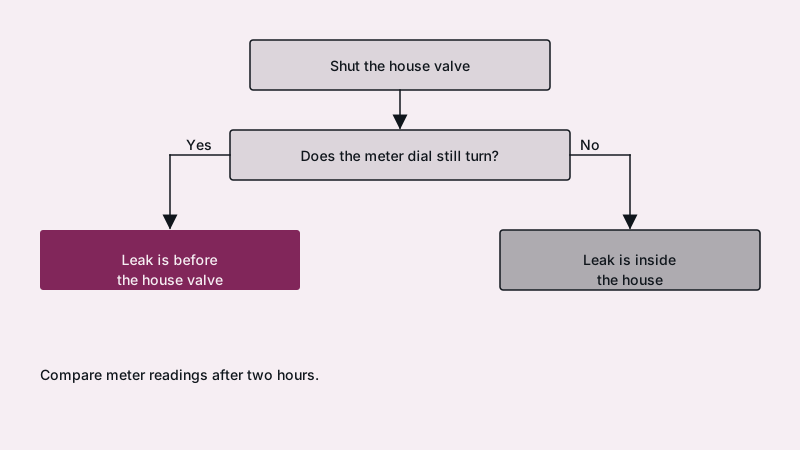
Start at the meter. Jot down the dial reading, leave everything off for about two hours, and compare. EPA recommends the same approach. If the number advanced, water is getting out somewhere out of sight. Warm floor patches and damp carpet margins narrow it down to a hot line below the floor.
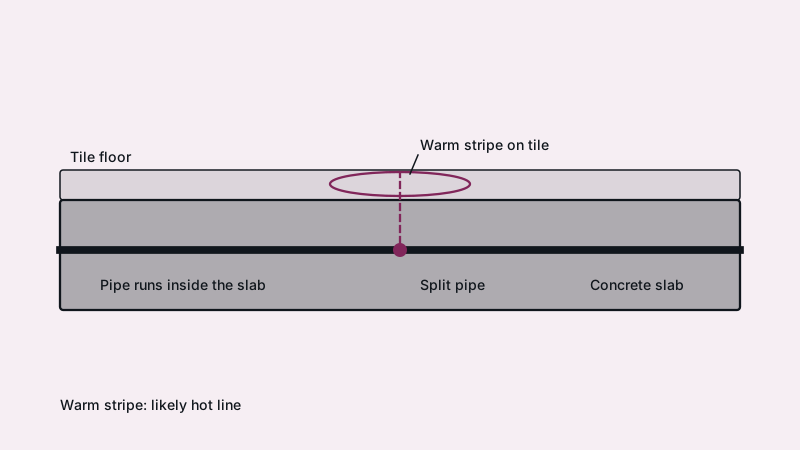
Homes built on poured slabs run supply lines beneath the floor, so a break can sit unnoticed for weeks. A short test sequence helps place it:
- Note the meter, close every valve at fixtures, and wait.
- Shut the house valve (the one on the home side of the meter). If the dial freezes, the problem is in your walls or floor. If it still turns, the leaking section lies between the street and your house.
- Cross tile and hardwood in bare feet and feel for a warm stripe.
- Press an ear to the floor, or rest a wooden spoon handle on it and listen at the other end.
Moulton Niguel Water District, which supplies parts of Mission Viejo, suggests the same valve test in its leak troubleshooting guide. Its meters report hourly, and the district sends an alert after roughly 22 hours of nonstop flow, so a quiet inbox is not proof of a dry house. Pinpointing a break below concrete takes sound or heat-imaging gear; what that typically costs is laid out in the slab leak repair price guide.
What goes first once water is spraying?
Shut the house valve. Next, crack open the lowest faucet; gravity empties the pipework, then cut the supply of electricity to any room where water reaches outlets or fixtures. Take photographs before anything is mopped up or thrown away. The order is deliberate: stop the flow, remove the shock risk, then document.
How each step plays out:
- The valve. Wheel or lever, it closes clockwise. A valve that will not budge needs a plumber, not a pipe wrench and force.
- The electricity. If water drips from a ceiling light or pools near a panel, do not wade in. A breaker panel in a dry hallway is fine to use. If the route to it is wet, phone an electrician, and dial 911 if someone could be hurt.
- The emptying. Lowest tap open, so what is trapped in the pipes drains out and the split stops spraying.
- The pictures. Wide shots, close shots, a date. Wet carpet or drywall stays put until an adjuster has seen it.
Mold prevention guidance from EPA puts the drying deadline for soaked materials at one to two days, so fans and water extraction should begin once the supply is off. For a stain overhead, the ceiling leak walkthrough covers the next steps, and your policy's fine print is unpacked in what insurers pay after a burst.
Can a leaking threaded joint be sealed without unscrewing it?
Treat anything you do in place as a bandage. Epoxy putty, a clamp or fusing tape can hold a weeping thread overnight on a drained, dry pipe, but a joint that leaks needs to be unscrewed, cleaned and resealed to stay fixed. Cranking it tighter often cracks old brass or galvanized fittings.
If you want a stopgap for the evening:
- Drain the line first, because putty and tape will not stick to a wet surface.
- Wipe the pipe, scuff it lightly with sandpaper, and apply the product as its label directs.
- Leave it for the stated cure time before restoring pressure.
- Mark the spot with tape so the plumber sees what is under the patch.
A pipe that has split along its length is a different animal from a loose fitting; a clamp merely bridges it. Tiny pinholes in copper form their own pattern, explained in the pinhole leak article.
When does a burst pipe justify a same-day call?
Ring the same day if water keeps coming after the valve is shut, if it is heading toward electrical gear, if a ceiling is bulging, or if you cannot trace the source. A drip you can see and contain at a fixture can usually be left until the next working day. Water sealed inside a wall cannot wait long, since moisture left there for days feeds mold and swells framing.
Hiring comes with state rules attached. Contractors need a state license once the work passes a thousand dollars, and any deposit is held to the lesser of ten percent of the price and a thousand dollars. Read the contractor's CSLB record before signing.
To get a visit arranged, tell us what is happening through the quote form; the written price comes first, before work begins. The plumber who visits will say whether the pipe can be patched or must be replaced. The full sequence from request to cleanup is on the how a job runs page.
Common questions
Roughly how long is the repair?
A reachable stretch, like a short run beneath a sink or inside a garage wall, often gets done in a single visit. Slab, wall-cavity and upstairs repairs take longer because of access and the drywall that follows. A firmer estimate arrives once the break is found, and expect drying and patching to stretch past the plumbing itself.
Does insurance pick up the tab for burst pipe damage?
Frequently the wet aftermath is covered, but the failed pipe and slow seepage over months usually are not. Wording varies. Read yours, and ring the insurer before large repairs, apart from steps that contain the damage. A plumber's written note naming the cause supports a claim. The insurance guide shows typical wording.
Can a pipe burst with nothing showing?
Yes. A split behind plaster, over a ceiling or beneath concrete may run for days before a mark surfaces. The meter test settles it: close everything, record the reading, wait two hours, read again. Movement with no fixture running means water is escaping. Musty odors and warm floor patches are the other early clues.
What sound does a bursting pipe make?
Some bursts bang and roar; plenty only hiss or trickle behind a wall. A thump or rattle right after a tap closes is usually something else, discussed in the water hammer page. If running water continues in a silent house, go straight to the meter.
Which questions belong in the first conversation with a plumber?
Collect the license number, then confirm it on CSLB's site. Learn how the break will be pinpointed, whether any walls or floors will be opened, who patches drywall, and whether a permit applies. Insist on the price in writing. Compare answers between at least two visits, so that vague replies stand out.
The rest of our guides start from plumber mission viejo.
Sources
Updated