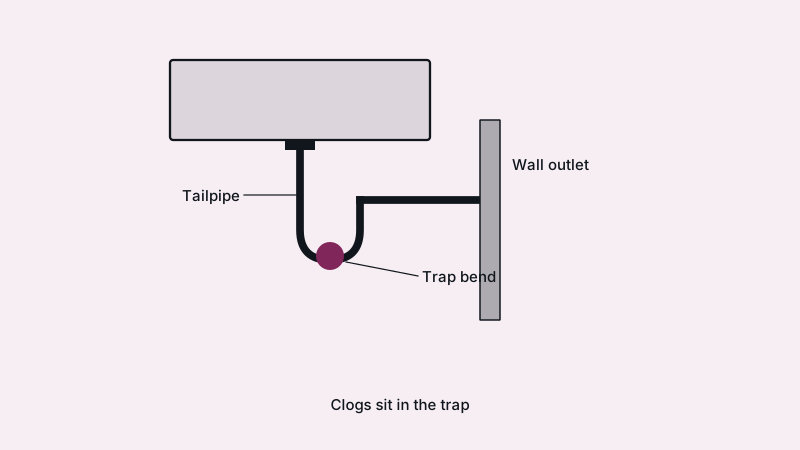
Grease is the villain in most kitchen sinks. It leaves the pan as a liquid, cools inside the pipe wall and traps everything that follows. That is why the trap, the bend right under the basin, is where nearly all of these blockages sit, and why a plunger or ten minutes with a bucket usually ends the trouble. When the bathroom sinks and a toilet are sluggish too, the blockage is somewhere else; read what to do for clogged drains and toilets and book a visit.
Gather a bucket, rubber gloves, a flat cup plunger and some old towels. A small hand snake helps but is not essential.
Which kind of kitchen sink clog is this?
Watch the water. A slow trickle suggests a partial blockage at the trap or the pipe beyond it. A pool that sits still is a full blockage. Bubbling or gurgling in a neighboring drain points to the shared branch line. Each pattern calls for a slightly different first move, and the gurgle is the one that should make you stop.
A quick checklist:
- Slow drain, only this sink: trap or tailpipe. Start with the plunger.
- No movement at all, only this sink: same area, but fully packed. Plunger, then trap.
- Dishwasher water backing into the sink: the shared drain, or a disposal that has jammed.
- Several fixtures gurgling or backing up: the shared line is blocked, so phone a plumber.
If a garbage disposal is in the sink, switch its power off at the wall or breaker before you start. The disposal repair page covers a unit that hums but will not turn.
How do I plunge a kitchen sink so it actually works?
Pick a cup plunger with a flat rim. Add water until the cup is buried, plug the other basin's drain with a damp cloth (and kink the dishwasher hose if you can reach it) so the force stays in the pipe. Press the cup onto the drain and pump about fifteen times with the rim sealed. Snap it off the drain on the last stroke.
Look at the basin afterward. A swirl means the clog is moving, so follow it with a kettle's worth of hot tap water. If the pool stays put, try twice more. A burst of dark, greasy sludge is encouraging: you are shifting the blockage.
One thing the plunger cannot do: clear a line when a disposal on the same drain is full of packed pulp. Empty it first.
How do I get the trap off and cleaned out?
Slide a bucket beneath the bend. Twist the two slip nuts loose by hand, then let the trap down into the bucket. A bottle brush or a gloved finger clears the sludge. Rinse the parts, look over the rubber washers, then thread everything back on snug but not forced. Switch on the water and run a fingertip along each joint to feel for dampness.
This step solves more kitchen clogs than anything else, and you learn what went down the drain. Expect a foul smell. Wipe the joints dry after the first test run and look again after a few minutes, as the EPA recommends for any fitting you have touched.
Replace on sight: a split nut, a flattened washer, a metal trap rusted through at the bottom. If a joint still weeps afterward, the guide to repairing a leaking pipe under the sink covers it.
When is a hand snake the right next tool?
Reach for the snake once the trap is empty and the basin still holds water. Push the cable into the wall stub, turn the handle as it advances, and stop when it catches. Work it to and fro for a minute, pull it out, wipe it, then flush the line with hot tap water.
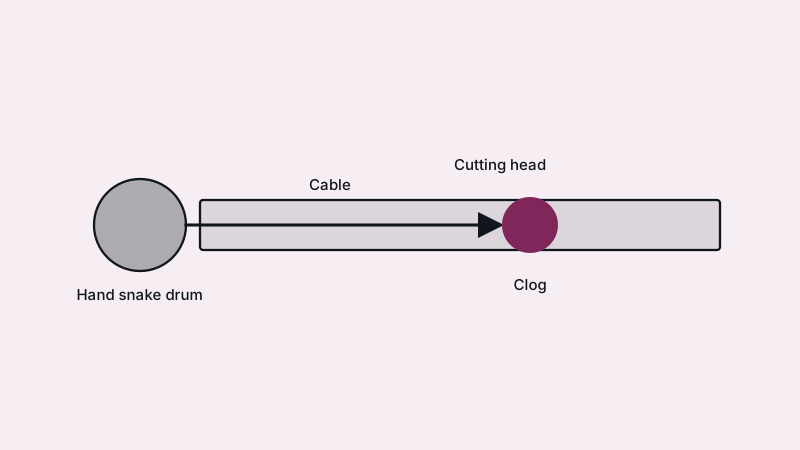
Stop if the cable hits something solid that will not yield. It may be a fitting or damaged pipe, and forcing it can scratch old pipe or pack the blockage tighter. A snake that keeps bottoming out, or a clog back within a week, is the moment for a plumber with longer cable or a camera.
Are drain openers, baking soda or boiling water safe to try?
Hot tap water is safe and helps with grease. Baking soda with vinegar fizzes and loosens a thin film, though a packed blockage will ignore it. Boiling water suits metal pipe but can soften plastic joints. Store-bought chemical openers are the one to avoid: they are caustic, can harm fittings, and leave a hazardous pool sitting in the trap.
Already poured a chemical cleaner? Mention it before anyone opens the trap, and protect hands and eyes. Never combine two different products, since the fumes are dangerous.
What stops a kitchen sink clogging again?
Treat the sink like a sieve, not a bin. Wipe greasy pans with paper before washing, tip cooled fat into a can, bin the coffee grounds and starchy leftovers, and put a mesh strainer over each drain. After a greasy wash, let very hot water run with a little dish soap for a minute. Opening the trap for a rinse a couple of times a year heads off the next clog.
A disposal shreds food, but fat and starch still settle beyond it. Rice and pasta swell with water and make a paste. If the sink slows down every month regardless of what you do, the issue is probably a narrowed branch line, which the page on slow sink drains explains.
Which signs say stop and call a plumber?
Call for help when plunger and trap both fail, the blockage returns within days, two fixtures slow together, neighboring drains gurgle, or water surfaces in a tub or floor drain. Each suggests the shared branch or the main sewer line, which needs a motorized cable or a camera.
Houses here from the 1970s onward have carried decades of kitchen grease through the same pipes, and mature trees in some yards can send roots into outdoor sewer lines. Neither is a weekend task. Typical charges appear on the plumber cost guide; other fixtures are covered at bathroom sink clogs and clogged shower drains. To ask for a visit, use the request form; the home page covers the rest of our work.
Common questions
Which quick fix should I try first on a stuck kitchen sink?
Lift out strainer debris, run hot tap water, and plunge with the second drain blocked. When that fails, open the trap over a bucket. Those two moves settle most kitchen blockages in one sitting, using little more than a bucket and a plunger.
Is a kettle of boiling water a good drain remedy?
On metal pipe, usually. On plastic pipe or glued joints it can soften the plastic, so use very hot tap water there. If one or two rounds do not move the clog, switch to the plunger or the trap rather than repeating the kettle.
Why does a sink with a disposal still clog?
A disposal chops waste but cannot stop fat, starch or coffee grounds from settling downstream. Fat coats the pipe wall as it cools, and rice or pasta swells into paste. The blockage normally lodges at the trap or beyond it. Generous water and less grease help.
Could two clogged sinks mean a main line problem?
It might. If the kitchen and another fixture slow or gurgle together, they probably share a blocked line, and that wants a plumber's cable machine or camera. A blockage confined to the kitchen sink is local, and the steps above normally clear it.
Can hair clog a kitchen sink?
Seldom. Grease and food cause kitchen clogs, while hair and soap scum block bathroom sinks and showers. Hair turning up in a kitchen drain may be coming back from a connected line, such as a laundry. If that happens, check the other drains too.
Sources
Updated