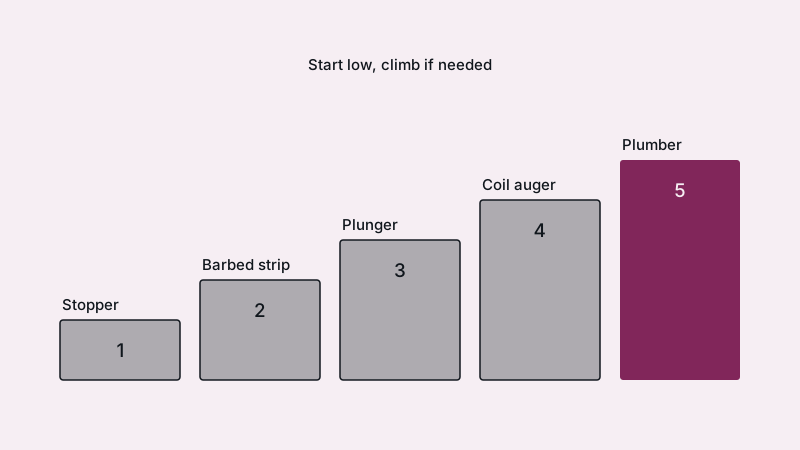
Start with the cheapest tools you own: fingers, a flashlight, hot water. Lift the stopper, pick off the hair, rinse, and only then reach for a plastic strip or a plunger. A clump of hair glued together with soap, sitting a short reach below the drain opening, explains most tubs that hold water. If the tub stays full, or other fixtures start grumbling, you have moved into drain cleaning and clogs territory.
Where should you start when the tub holds water?
The stopper comes first. Pull it, then peel off the hair wrapped around its post and wedged in the grid, because that tangle is often the whole story. Chase it with a minute of very hot tap water. A swirl means success; a still surface means climbing the ladder below.
Stoppers differ. Lift-and-turn and push-pull types unscrew or lift out. A trip-lever tub hides its plug behind the overflow cover plate; remove the plate, then withdraw the linkage with the plunger attached. Snap a phone photo before taking anything apart, so reassembly is a matter of matching the picture.
What is the order of escalation after that?
Think of five rungs. One: stopper and hair. Two: a barbed plastic strip. Three: a plunger, overflow sealed. Four: a compact coil auger. Five: a plumber. The reason for the order is risk. Each rung is slightly more likely to scratch finishes or damage pipe than the one before, and none is as risky as a bottle of drain chemicals.
- Rung two. Slide the strip down past the strainer, give it a twist, draw it up slowly, wipe it, and keep going until it surfaces clean.
- Rung three. Block the overflow slots with a wet rag or tape, cover the plunger cup with water, and push down in a dozen firm strokes before pulling away.
- Rung four. A short coil auger reaches a little deeper. Feed it with patience, never muscle it, and back off if it jams hard, since a forced cable can scratch or puncture a pipe.
Does the fizzy pantry trick do anything?
Mostly it fizzes and feels productive. Against hair it does very little. Hot tap water does better on soap and grease. A kettle at full boil can soften plastic pipe joints and crack porcelain, so skip it. Never combine household cleaners, and never layer a store-bought chemical product on top of another one.
Chemical openers are a poor bet in a tub with standing water. The liquid stays pooled around your hands when you plunge afterward, spatters when you snake, and can harm some pipe materials. If one went down before you read this, warn the plumber before anyone puts tools or hands near the drain. Mechanical removal beats chemistry for hair every time.
What about a sluggish kitchen sink?
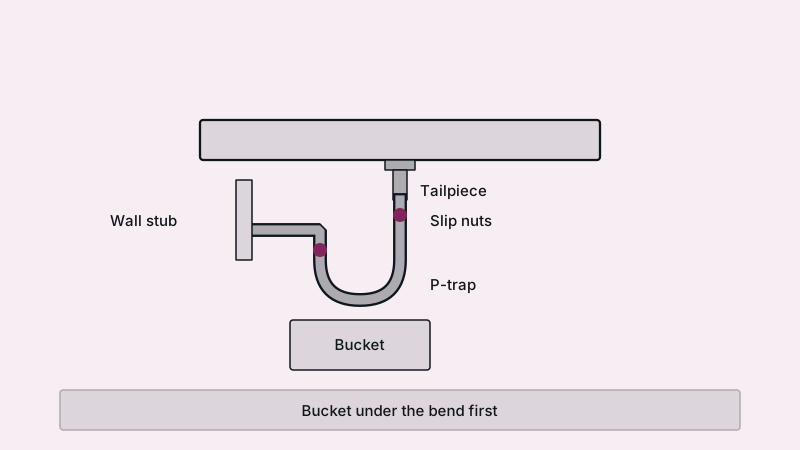
Kitchen sinks fill with grease, coffee grounds and food film, so the answer is typically the trap, not the plunger. Bail the basin, set a bucket beneath the U-bend, loosen the slip nuts, and scrub out the trap and the short pipe above it. Put it back together, run hot water, and check each joint for seepage.
Grease film gives way to hot, soapy water poured in slowly. If a disposal is fitted on one side, the blockage may sit in the arm running to the wall; switch off power at the breaker before anything goes near the unit, and keep hands out of it entirely. If both halves of a double sink back up together, the obstruction is beyond the trap, and the next step is a snake from a cleanout or a plumber. Further reading: clearing a kitchen sink and reasons a sink drains slowly.
What is the routine for a blocked bathroom basin?
Park a bucket under the curved P-trap, back off both slip nuts and lower the trap into the bucket. Poke a bent wire or little bottle brush up the tailpiece and into the wall stub. Seat the washers flat when you reassemble, then open the tap and watch for drips.
Bathroom basins clog on hair, toothpaste and soap, which collect on the pop-up rod behind the drain. Pull the stopper first; a surprising number of slow basins need nothing else. The longer version is in unblocking a bathroom sink, and shower drain clogs covers the stall version of the tub fix above.
Is there a way to clear a deep blockage with a home remedy?
Not reliably. Past arm's reach, the job needs a long cable machine, and cupboard remedies have neither the force nor the length. When several fixtures run slow or gurgle, suspect a branch or main line and go easy on water until someone clears it.
Main line clues: a toilet that burbles each time the tub empties, a floor drain overflowing during a wash cycle, sluggish flow on every level of the house. Homes built from the 1960s to the 1990s can have aging drain pipe, and roots can find their way into the lateral; a plumber can look inside with a camera. If water rises at an outdoor cleanout, stop using water altogether.
At what point does a clog become the plumber's problem?
Call it quits after both a snake and a plunger fail, or when a second drain misbehaves, a sewage odor appears or water pops up somewhere new. The main sewer line is plumber territory, and California's contractor license rule applies from $1,000 or for permitted work.
Tell us what the drains are doing through the quote form; a plumber then visits and states the price up front. The sequence is mapped on the how a job runs page. CSLB lets you look up a license, and deposits are capped well below the full job.
Common questions
How quickly can a tub clog be cleared?
Cleaning a stopper takes minutes; a snake or plunger session maybe a quarter hour. A plumber's visit for something deeper is usually short when the blockage is within reach, longer if a camera or machine is involved. Ask how the clog will be reached and what the price includes.
What belongs in a drain cleaning quote?
Confirm that it states whether a camera look is included, the method of clearing, the plan if the blockage returns and a license number that checks out. Ask whether a cleanout will be opened or the work stays at the fixture, and hold on to the price in writing.
Do I have to stay home during drain work?
Someone does: the bathroom and any outdoor cleanout must be unlocked and the work approved. Tidy the floor around the tub or sink first. Cables, buckets and machines are noisy and can lurch, so pets and children belong in another room.
Should I ever pour drain cleaner into a tub?
Better not. The liquid splashes, may attack some pipes and finishes, and makes the next person's work riskier. If one has already gone in, tell the plumber. A plastic strip or plunger is cheaper and kinder to most tub drains.
Why does the tub keep clogging?
Usually hair that never gets caught before it reaches the pipe, plus soap scum narrowing the bore. A cheap drain catcher helps a lot. If clogs keep returning in an older house, the pipe itself may be rough, corroded or sagging, and a camera look can tell before the next backup.
The rest of our guides start from Capistrano Plumbing plumber.
Sources
- Plumbing fixture and drain cleaning guidance from manufacturers of drain tools and fixtures, compared November 2026
- Contractors State License Board
- Moulton Niguel Water District, customer service
Updated