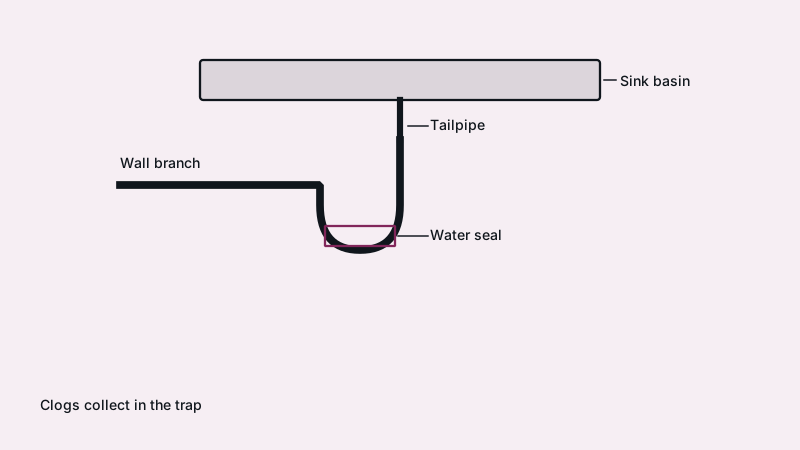
Follow the water. A sink that is slow by itself has a snag in its own trap or tailpipe, and you can usually deal with that in half an hour. A sink that is slow along with the tub, the washer standby pipe or the toilet has a snag in a shared pipe, and that is plumber territory. If a toilet is also acting up, read clog help for toilets and drains first.
What slows down a kitchen sink?
Fat, starch and coffee grounds. They cling to the pipe wall, trap food scraps, and shrink the opening a little more each week. A disposal hides the problem because it grinds scraps but leaves the coating behind. Hot water melts the grease so it flows away, then it sets again where the pipe cools.
A two-bowl sink gives you a clue: whichever bowl drains worse sits on the clogged side, typically in the trap or at the tee where both bowls join. If the disposal hums or only drains after a long pause, look at the unit itself in garbage disposal repair. The hands-on routine for the sink is in clearing a kitchen sink.
Why does the bathroom basin drain slowly but never block?
Nine times in ten the cause is a hair-and-soap plug around the stopper rod or pivot ball, glued together with toothpaste. Water slips around the edges, so the basin empties, just slowly. A bathroom sink that has been sluggish since move-in may have a trap or vent issue instead.
Work through it like this:
- Lift out the stopper and wipe off the slime.
- Peek underneath for dampness around the nuts.
- Run the tap with the stopper out. Faster? That was the problem.
- Still slow? Place a bucket, unscrew the trap and rinse it out.
More detail lives in clearing a bathroom sink. Local water plays a part too. Hard water is common in south Orange County, your water district's latest report lists the hardness number, and years of mineral scale can narrow a pipe.
Will a plunger help a slow sink?
For a clog near the fixture, yes. Pick a cup-style plunger, add enough water to submerge its rim, press a wet cloth over the overflow slot, and pump hard for about twenty seconds. Water that suddenly gulps down means success. Try it twice more if needed, then let the hot tap run a while.
With two bowls, stopper the other drain first, otherwise the pressure leaks out through it. If the plunger pulls up gray, smelly water, the stoppage is grease, and a trap cleaning or small hand auger is the next step. A plunger is the wrong tool for a deep blockage, and it is a poor idea whenever chemical opener is still sitting in the basin, since splashes burn.
Are drain openers and kitchen-cupboard remedies worth the trouble?
Baking soda with vinegar fizzes nicely and clears very little. A mechanical approach does more: take off the trap, use a plastic barbed strip or small snake, and rinse. Hot tap water is fine for rinsing, but keep boiling water away from plastic drain pipe.
Caustic drain openers are best avoided. They attack old fittings and leave a hazard for whoever opens the trap afterwards. Mixing products is dangerous. A bottle of enzyme cleaner used monthly may slow the buildup of grease, though it will not dissolve a solid plug. If a product is already in there, say so when the visit is arranged.
The tub or shower backs up and nothing is stuck at the drain. Why?
Then the obstruction sits lower, usually in the branch that serves the whole bathroom or in the main line. Test with a quick experiment: run the bathroom sink, flush the toilet and see whether the tub gurgles or rises. If it does, those fixtures share the blockage and it needs a machine.
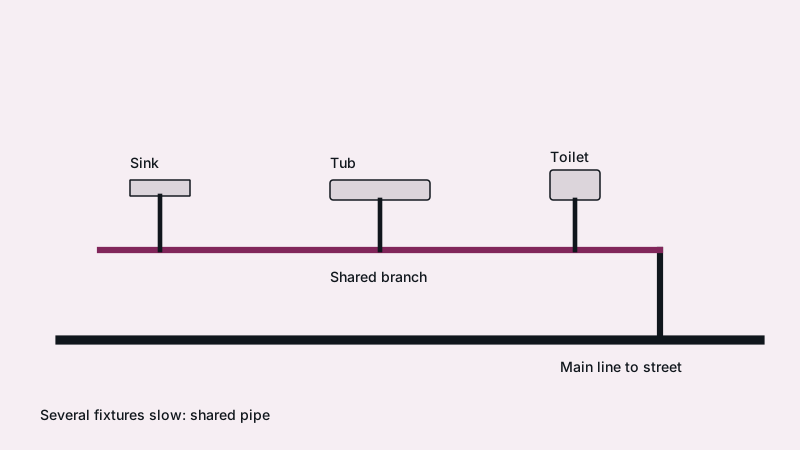
Slow tubs in older houses sometimes trace back to a jammed stopper, but roots or scale inside the buried line are also possible. Running a cable and a camera through the line settles it. For one fixture at a time, see clearing a clogged tub and a blocked shower drain.
At what point does a slow sink need a professional?
Phone for help if two or more fixtures are sluggish, drains gurgle, you smell sewage, a scrubbed trap changed nothing, or the problem is back inside a week. A plumber runs a drain machine and can inspect the pipe with a camera, which also shows slope or vent faults.
The plumber will want to know what has been rinsed down the pipes, which fixtures are affected, and since when. Requests are handled weekdays from 9 to 5, after which someone local drives out. Name the slow fixtures on the price request form. For the full picture of a visit, the Capistrano Plumbing home page is the place to start.
Common questions
The sink is only slow now and then. What does that mean?
A partial clog that moves around. Grease softens under hot water and hardens again, and a hair mat can rotate in the trap. Water that runs fast after a rest and then slows can also mean the obstruction sits farther down the line. A camera visit finds what the plunger cannot reach.
Is this urgent?
Not if it is one sink and nothing overflows. Deal with it within days, before the blockage thickens. It becomes urgent when sewage smells appear, water rises in other fixtures, or the toilet and tub fail together. Those signs suggest the main line, and delay can mean a bigger mess.
How do I keep the kitchen drain from clogging next month?
Scrape plates into the trash, wipe greasy pans first, and keep oil and coffee grounds out of the sink. Run hot water for a few seconds after use, fit a basket strainer, and clean the trap now and then. A disposal does not make these things safe to send down.
Could tree roots be behind a slow sink?
They can block the sewer lateral, mainly in aging clay or cast-iron pipe, though the symptom is sluggish drains throughout the house rather than at one sink. A camera confirms it. Cutting roots is plumber work, and replacing a stretch of line normally involves a permit. Ask to see the camera footage.
Is a slow drain cheaper to clear than a full clog?
Generally the same, since the job is identical. Cost follows access, how far the blockage sits and whether a camera is used. Have the price in writing first. Find out what the visit fee covers. A trap cleaning is a much smaller task than clearing a main line.
Sources
Updated