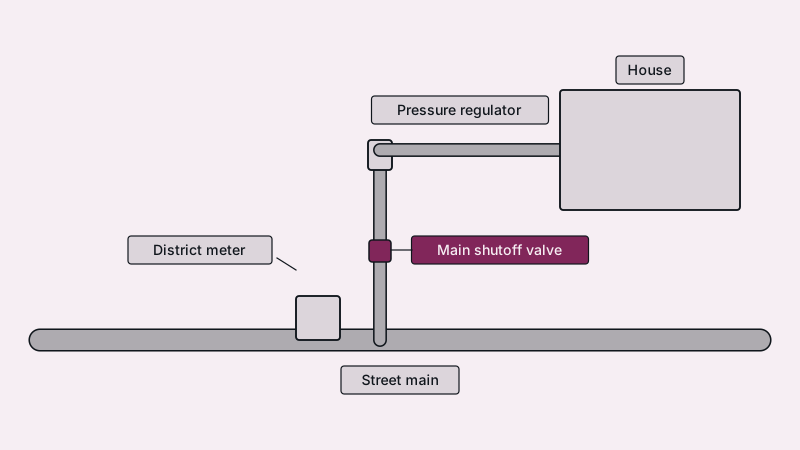
Pressure that falls off a cliff overnight points to a sudden event: a partly closed valve, a water district repair, a failed regulator or a leak. Slow decline over years points elsewhere, to scale or old pipe. First find out whether the neighbors have the same trouble, then walk the checks below in order. The hub page on low water pressure plumbing covers the long-term causes and fixes.
Is it just my house, or the whole street?
Ask the next-door neighbor, and look at the district's outage notices. Mission Viejo homes draw from different districts depending on the street, so your bill names the one to check. If neighbors are low too, the cause is on the utility side, such as a main repair or a valve change, and it will probably clear without you doing anything.
The City's utility list names El Toro Water District, Moulton Niguel Water District, Santa Margarita Water District and Trabuco Canyon Water District. If the pressure loss is street-wide, call your district's number on the bill and ask about work or a main break nearby. Many districts post outages online. If the trouble is limited to your house, read on.
Think back over the last few days. Did a crew work on the street, or did anyone touch the plumbing, the heater or the yard? Shutoffs stir up air and grit that choke small screens, and a valve can end up only half open.
Did something leave the main valve half shut?
This check takes a minute, so do it early. The house main sits near the meter or the front wall and is easily nudged or left partway closed after work. Wheel-type valves open fully by turning counter-clockwise. Lever types are open when the handle runs parallel to the pipe. Open it fully and try a tap.
Anything upstream of the meter is the district's, so do not touch it. Valves on your side are yours to operate, gently. A corroded one can snap or begin to weep when turned, and swapping it is plumber work. Two other places to look: the shutoff at the heater and any valve beside the regulator.
Could a leak explain a sudden drop?
Yes. A major leak between the street and the taps steals pressure before it arrives. The meter tells all. Use no water, write down the dial, return after two hours. EPA recommends exactly this routine. A moved reading means water is leaking. Also listen for hissing and watch for soggy ground.
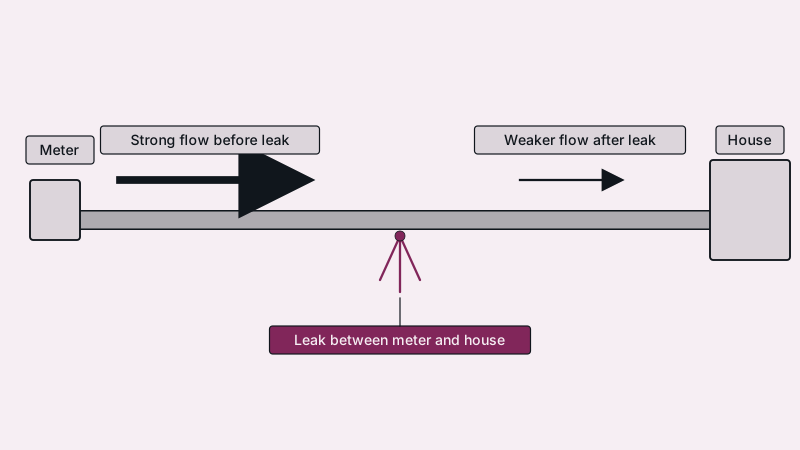
A leak large enough to cut pressure generally shows itself. Walk the strip between meter and house for soft soil, a brimming meter box or grass that turned lush overnight. Indoors, feel for a warm floor, a damp slab or a stained wall. Water where it should not be? Close the main and call. Emergency steps are on the burst water pipe page, and ceilings are covered in water leaking through a ceiling.
Has the pressure regulator gone bad?
Possibly. Many hillside-tract homes have a regulator, a squat bell-shaped valve at the service entry, that keeps house pressure in check. A failing one lets pressure surge, hammer the pipes or sag. The plumber screws a pressure gauge to an outside spigot, reads it, and replaces the regulator if the figure is wrong.
Typical signs: every fixture changes together, pressure that rises and falls, and noisy pipes. The plumber sets the target against fixture and code limits. Leave the adjustment screw alone unless a gauge is attached. Find out more on the pressure regulator replacement page and where it sits in where is the regulator.
Is it only hot water, or one fixture?
One weak tap means a local fault, usually a blocked screen, a tired cartridge or a kinked supply hose. A weak hot side only points toward the heater. To test the screen, unscrew it and run the tap bare. If flow recovers, soak the screen or buy a new one. Five minutes, no tools beyond pliers.
For hot-only trouble, the hot water pressure low article walks through valves and scale. Water from Moulton Niguel Water District, which serves parts of Mission Viejo, is hard, according to its 2023 report listing hardness of 99 to 321 ppm, so scale in aerators and showerheads is common and clears easily. Showerheads can be unscrewed and soaked.
Why is pressure poor right after plumbing work?
Begin with the contractor. After a job, thin flow can come from a half-open valve, grit in a line, solder bits in a screen or a regulator dialed too low. Tell them what you see and when it started. Work done within days should be revisited.
Debris is common after pipes are cut. Take off each faucet's aerator and let the water run briefly to flush out grit. If a new water heater or softener was put in, check its bypass valves, which may be in the wrong position. A water softener installation can reduce flow if the valves are set to the wrong mode or the unit is clogged.
When is a visit justified?
Arrange a visit if the main is wide open and neighbors are unaffected, if the meter moves, if pressure surges, or if you see wet soil or damp walls. Write down the timings, the fixtures involved and your meter result, so the visitor arrives prepared.
Describe what you found in the quote request; more of what we arrange is on the home page. Ask for the pressure as a number, and and ask for the price in writing ahead of any repair.
Common questions
Why did my water pressure drop suddenly and then come back?
Pressure that dips and recovers often traces to a district valve change, a tiring regulator or air left in the lines after a shutoff. If it happens at a set time of day, mention that to the plumber, since demand on the street can matter. A pressure gauge left on a spigot shows the pattern.
Can a clogged water filter cause low pressure everywhere?
Yes. A whole-house filter, a softener or a sediment cartridge restricts flow as it clogs, and the whole house feels it. Check the filter housing and change the cartridge, or open the bypass for a minute to test. If the pressure returns with the bypass open, the filter or softener is the cause.
Does low pressure mean my pipes are failing?
Not necessarily. A sudden loss usually has a simple cause, such as a valve or a leak. Gradual loss over years is more likely to reflect scale or corroded pipe. Tell the plumber the house's age and the pipe material, which narrows the suspects.
Is it dangerous to ignore a sudden drop in pressure?
It can be if a leak is behind it. A leak wastes water and damages floors and walls. EPA counts typical household leakage in the thousands of gallons yearly, and a large leak is far worse. Run the meter test and, if it shows movement, shut the main and arrange a visit.
Sources
Updated