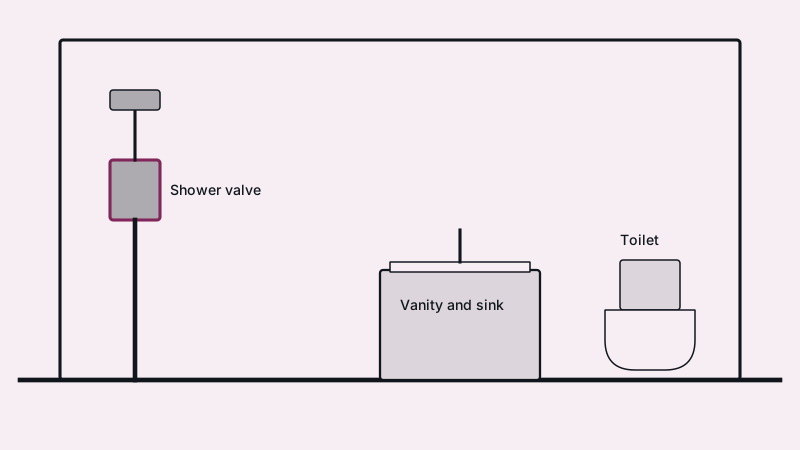
In a bathroom remodel, the plumber works twice: once after demolition, to rough in pipes while the walls are open, and a second time at the finish to set fixtures. Everything between those visits waits on the first one passing inspection. A remodel that keeps the toilet, tub and sink where they are is a simple plumbing job. Moving any of them changes the scope. This is a complete walk through the plumbing side. The Capistrano Plumbing home page lists what we can arrange, and the quote request starts a conversation about your bathroom.
When does the plumber come in during a remodel?
Twice, and the first visit matters most. After demolition, the plumber roughs in new drain, vent and supply lines, sets the shower valve and tests the pipes while the walls are open. After the rough-in inspection, the wall and floor trades close it up. The plumber returns to set the toilet, vanity faucet, and shower trim once the tile is done.
Booking only the second visit is the common mistake. If the first one is late, the whole crew sits idle. Book both visits with the contractor before demolition starts.
What plumbing changes are cheap, and which ones are expensive?
Swapping fixtures in place is cheap. Moving a sink along the same wall is modest. Relocating a toilet, shower or tub drain is where the price climbs, because drains need slope, a vent, and space in the floor or wall, and on a slab they mean cutting concrete.
| Change | Typical effort | Why |
|---|---|---|
| New faucet or toilet in the same spot | Light | Connections already exist |
| New shower valve in the same wall | Moderate | Wall is open, valve is replaced |
| Moving the vanity along a wall | Moderate | Short drain and supply extension |
| Moving a toilet or tub on a slab | Heavy | Concrete cut, new drain and vent |
| Walk-in shower replacing a tub | Moderate to heavy | Drain relocation, floor work |
Will the city want a permit for my bathroom job?
Most remodels that change pipes need a permit and inspections. Mission Viejo handles them through Building Services, where permits and inspections are submitted and scheduled online, and where questions go to 949-470-3054. The city's page does not list which plumbing items need one, so ask before work starts. Swapping a faucet is one thing, relocating a drain is another.
Whoever is hired normally applies. California draws its contractor license line at $1,000 for labor plus materials, and limits the deposit on home improvement work to 10 percent or $1,000, the lower one. For a look at how the city process runs, see permits for water heaters, which follows the same portal.
Should I replace old pipes while the walls are open?
If the walls are open and the pipe is original, this is the cheapest time to renew it. The city grew from about 12,000 residents in 1970 to about 73,000 in 1990, so many bathrooms here are 35 to 55 years old, and supply lines and shutoff valves of that vintage may be close to worn out.
Check what you have. Certain tracts in this part of Southern California were plumbed with polybutylene between the late 1970s and the 1990s, a pipe with a record of failing at fittings. Read polybutylene pipe replacement to identify it, and PEX versus copper if you are choosing a replacement. At minimum, replace the angle stops and supply lines.
What fixtures and flow rates should I buy?
Choose fixtures that meet California's water efficiency rules, and look for the WaterSense label. EPA says labeled toilets use 1.28 gallons or less per flush, roughly 20 percent under the federal 1.6 standard. Showerheads and faucets have their own flow ratings printed on the box and the product page.
Match the fixtures to the pipes. A rain showerhead with several jets can overwhelm a small supply line and give weak pressure, and a valve that balances pressure, or one with a thermostat, holds the temperature steady. Buy the shower valve and trim as a matching set, because trims are not interchangeable between brands.
Does the shower valve need to be chosen before the wall is closed?
Yes, and the exact model matters. The rough-in valve body is set inside the wall, and the trim kit has to match it. Pick the valve, the showerhead and any body sprays before the plumber's first visit, and hand the plumber the manufacturer's rough-in sheet.
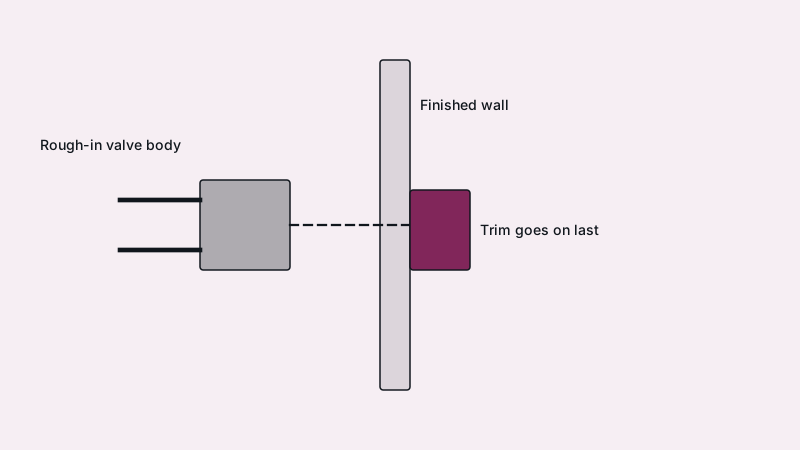
Set the valve at the right depth for your tile thickness, or the handle will not seat. Leave an access panel for tub valves where possible. In hard water, shower cartridges scale up over time, so being able to reach one later saves a wall repair.
What can go wrong with plumbing in a remodel?
The usual surprises are old pipe that breaks when disturbed, drains that lack proper slope, a missing vent, and a leak under a shower pan found only after tiling. Any of them is cheaper to correct before the walls close. Insist on a leak test on the shower pan, which means filling it with water and watching the level before tile goes on.
Water pressure matters too. If your remodel gives weak flow at the new shower, see low shower water pressure. A leak after the job is covered under shower leak repair.
How do I coordinate the plumber with other trades?
Sequence matters: demolition, framing, plumbing rough-in, rough inspection, insulation and drywall, waterproofing, tile, then fixture setting. Tell the plumber the date the walls open and the date tile starts, and ask for a window on each. A plumber who arrives before framing is done will have to return.
Keep a single written scope that states who supplies each fixture and who pays for permits and inspections. Ask for fixture model numbers on the quote, so nothing is substituted. Compare your quote with what faucet installation and toilet replacement normally cost.
Common questions
How long does bathroom remodel plumbing take?
When fixtures stay put, plan on a day or two for rough-in and another half day to a full day for trim-out. Moving a tub or toilet on a slab takes longer, since concrete is cut and a drain has to be dug. The calendar matters more than the hours, because the plumber waits on framers and tile setters.
Can I move the toilet in a bathroom remodel?
Usually yes, but expect extra cost. A toilet needs a drain of the right size, a vent, and slope. On a raised floor the drain can be rerouted between joists. On a slab, the floor is cut open. A plumber can tell you if the new spot works before you commit to the layout.
Should I swap the shutoff valves too?
Usually, and it costs little while the vanity is out. Aged stop valves and the lines on them fail often, and fresh ones make the next faucet or toilet swap easy. If the valves will not close, the plumber will want to shut off the main to do the work.
Is a permit needed to replace fixtures only?
Exchanging a faucet or toilet for the same kind often needs none, though rules vary and the city's online pages do not list them. Ask Mission Viejo Building Services at 949-470-3054 before starting. If you are relocating drains or changing the valve, expect a permit and inspections.
Sources
Updated