Picture a gas water heater the size of a suitcase, bolted to an exterior wall and rated for rain. Its exhaust leaves into open air, so nothing needs to be vented through the roof or garage. That appeals to Mission Viejo owners with a crowded garage or a closet that cannot be vented. Gas pipe, power, water, a drain and a permit are still part of the job. Read the water heater overview, and use the request form to ask for a plumber.
If the indoor version is also on your list, compare it with gas tankless installation.
Why would someone choose an outdoor tankless unit?
The main reasons are no indoor vent run, freed floor space, and fewer combustion-air worries. An outdoor-rated unit has its own weather-protected housing, so you skip the roof penetration or long vent through the house. It also keeps burner noise and the warmth of exhaust outside. It suits homes where the old tank sits in an enclosed utility space.
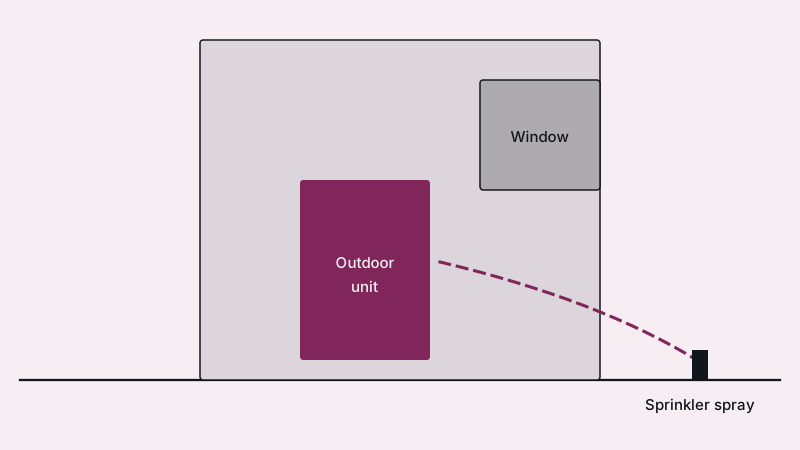
The trade-off is exposure: wind, sun, rain, irrigation overspray and, in coastal areas, salty air. Mission Viejo is inland and sheltered compared with Dana Point or San Clemente, but sprinklers hitting the unit are a real hazard in any Orange County yard. A unit installed in the wrong place can be wet every morning.
Look for models marked for outdoor use by their maker. An indoor unit placed outside is not allowed under its instructions.
Where on my property can it go?
On an exterior wall, at a height and distance from openings laid down in the maker's manual and the building code. Typical constraints are clearance from windows, doors and vents, distance from property lines, a firm wall to hang from, and enough room around it for service. The route to the existing hot water lines matters as well, because longer pipe means more waiting for hot water.
Stucco walls are common here, and the bracket needs to be fixed to framing, not just the stucco. Think about service access too: a unit boxed in by a fence or a planter cannot be flushed or repaired.
In many Mission Viejo neighborhoods, the homeowners association may need to approve equipment visible from a street or a common area, or require a screen or color. Ask your association before you order anything, since a refusal after installation is expensive.
What does an outdoor installation need for gas, power and water?
Three connections, all weatherproofed. Gas piping must reach the wall, sized for the unit's load. A grounded outlet protected against moisture supplies the fan and controls. Water lines come in with insulation and isolation valves. A condensing model also needs a condensate drain, which has to go somewhere that will not pool or freeze.
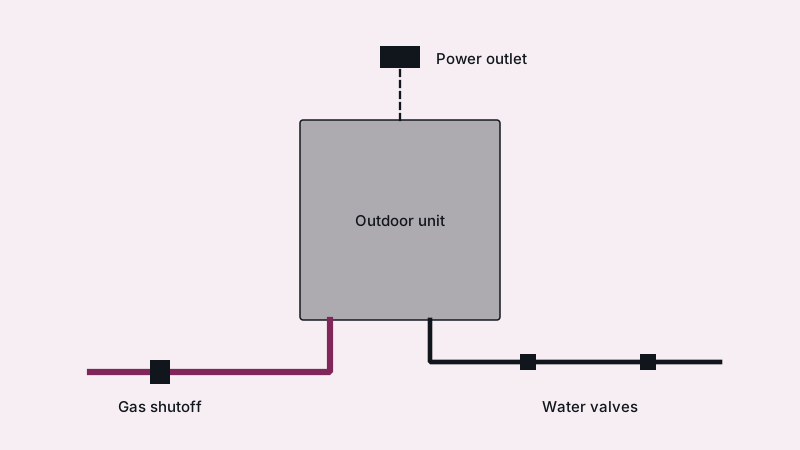
The gas side is the regulated one: in California a contractor runs and tests gas pipe under a permit. Sizing follows every appliance on the line and the length of the run; see residential gas piping codes and gas line plumbing. If gas is ever smelled, people go outside first and the utility's emergency line is called from there.
Before the plumber leaves, ask to be shown both shut-offs, gas and water, so you can find them in a hurry.
Does weather, freezing or salt air matter in south Orange County?
Less than in cold regions, but it still matters. Makers build freeze protection into outdoor units and quote the lowest temperature it covers, so read that figure. Exposed pipe between the unit and the house should be insulated. Near the coast, salt air can corrode brackets and cabinets over time, so ask about corrosion-resistant models and finishes.
Wind can affect burner operation in some models, so keep the unit out of a wind tunnel between buildings. Sun is hard on plastic covers and cables. Irrigation overspray can hit the unit, and that can trip safety controls and rust fasteners. Redirect any spray head that reaches the wall.
What should an installation quote include?
No sourced figure is printed here. A good quote lists the unit, labor, gas and water pipe, weatherproof power, condensate drainage, any screen or enclosure, permit and inspection, and disposal of the old tank. Exterior runs can be longer, so the pipe lines may differ from an indoor job.
The tankless installation cost page walks through the usual lines, and tank vs tankless helps you judge whether it pays off. Ask how the plumber will deal with the hot water delay on a long pipe run, since a recirculation pump or a smaller-diameter line is sometimes needed.
The state requires a contractor license from $1,000 of work, and caps deposits well below the full price. Look the contractor up before signing.
What does the permit and inspection involve?
A new water heater generally needs a permit, and gas work adds a leak test and an inspection. The contractor normally applies to the City of Mission Viejo Building Division. The inspector looks at gas piping, exhaust clearances, water connections and mounting. Keep the final paperwork with your house records.
More detail is in water heater permits. We did not confirm local fee amounts, and they change, so ask the city.
How is an outdoor unit maintained, and what can go wrong?
Upkeep mirrors an indoor tankless: periodic descaling, a look at air intakes and screens for debris, and a check of housing and connections for moisture or corrosion. Hard water is the heat exchanger's main enemy, and the USGS places water above 180 mg/L in its very hard band, so ask your district what it reports.
Common outdoor-specific faults are insects or debris in the burner area, a drain that has frozen or clogged, and moisture around the electrical connection. For fault codes and repairs, see tankless gas water heater repair and the repair cost page.
Common questions
Can any tankless water heater be installed outside?
No. Only models designed and listed for outdoor use by their manufacturer should be mounted outside. An indoor unit has no weather protection and is not meant for exposure. Read the model's rating and the installation manual, and have the plumber confirm outdoor suitability in the quote.
Is an outdoor tankless heater cheaper to install than an indoor one?
Possibly, when it replaces a long indoor vent run, though it can cost more if gas or water pipe must be extended to an outside wall. Any flat comparison would be a guess. Ask for both options on one quote and compare the lines.
Will the HOA allow an outdoor water heater?
That depends on your association's rules. Some require approval for visible exterior equipment, screening or set locations. Read your governing documents, ask the board before ordering, and keep any written approval alongside the permit paperwork for later. Approval rules differ between associations, so do not assume a neighbor's installation sets a precedent for yours.
Do outdoor tankless units freeze in winter?
Outdoor models include freeze protection that works down to a temperature stated by the maker, provided the unit has power and gas. Exposed pipes outside the unit still need insulation. Hard freezes are uncommon here, but read the manual's limits and keep the unit powered.
Does hot water arrive slower with an outdoor unit?
It can, if the unit is far from the fixtures, because water has to travel the pipe first. Choosing a wall close to the bathrooms and kitchen helps. A recirculation pump or insulated lines also help, and a plumber can advise which suits your layout.
This guide is one of many on Capistrano Plumbing plumber.
Sources
Updated