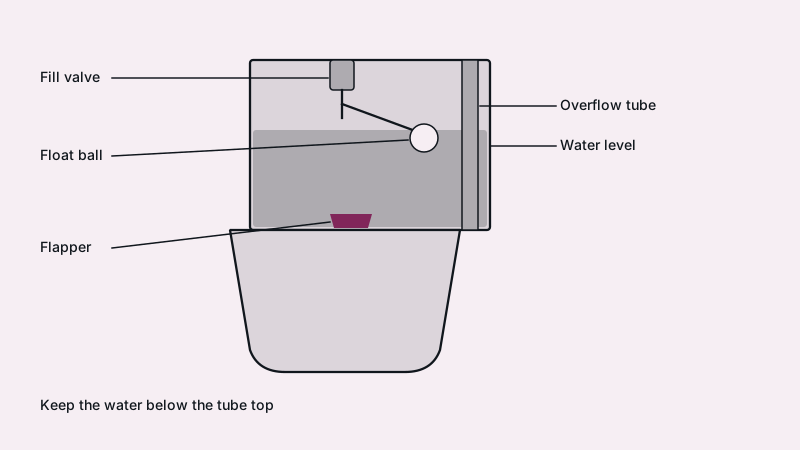
A running toilet announces itself in one of three ways, and each sound has a different culprit. A steady hiss while the tank is full points to the refill mechanism. A short burst of refilling every so often, with nobody flushing, means the flapper seal is weeping. Water spilling down the center tube is a float set too high. Pick your sound, then follow the matching fix below. The wider toilet repair page covers the other things that go wrong with a bowl.
Which sound does my toilet make, and what does it mean?
Listen standing next to the tank after the refill should have ended. Hissing means the refill valve is still open. A distant trickle into the bowl, followed later by a gulp of fresh water, means the rubber seal is leaking. Silence plus a wet floor is something else, covered further down.
| Symptom | Probable cause | Start here |
|---|---|---|
| Constant hiss, tank full | Worn refill valve or float set high | Lower the float |
| Refills for a few seconds now and then | Flapper not sealing | Dye test, then replace flapper |
| Handle must be held down | Chain too long or lift arm bent | Shorten the chain |
| Water flows over the center tube | Water level too high | Adjust the float |
| Runs only after a flush | Chain snag or flapper floating | Free the chain |
Water hardness varies by district and by street, and your district's yearly water quality report gives the figure for yours. Hard water leaves scale, and crusty scale on a rubber seat is a very ordinary reason a seal that looked fine last year now lets water by.
How can I prove the flapper is leaking?
Stir a few drops of dye into the tank water, step away, and glance at the bowl after about ten minutes. Dye showing up there proves the flapper leaks. EPA WaterSense says to wait ten minutes. A clear bowl tells you the stray water is going over the center tube instead.
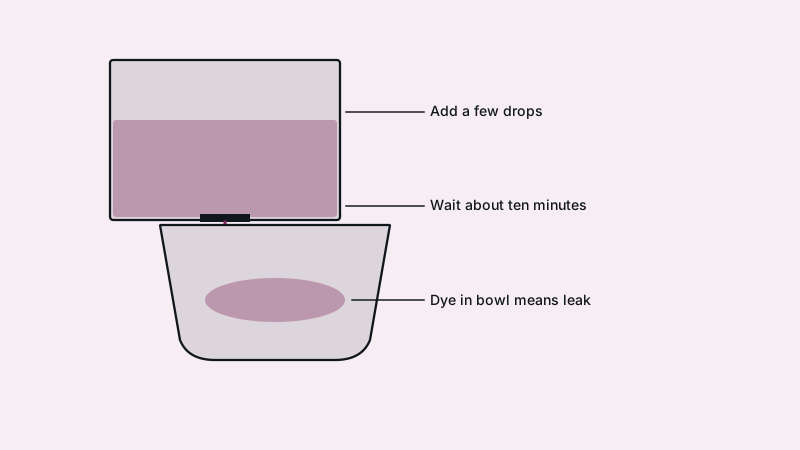
Flush once the test ends or the tank will stay tinted. Seals fail without noise. EPA says a flapper should be replaced at least every five years. A leak this small can run all night, and the only clue may be a water bill that creeps higher.
How do I silence a toilet that hisses or never shuts off?
When it never stops, water is probably flowing over the center tube. Turn the adjustment screw on the refill valve, or slide its float, until the waterline sits just under the top of that tube. Still running? Shut the wall valve, flush the tank empty, and swap the whole refill valve, a boxed kit sold at hardware stores.
A sensible order for a toilet that never quits:
- Look at the chain. A little slack, around half an inch, is right.
- Lower the float.
- Wipe the flapper seat with a rag, because slime and scale stop a seal.
- Replace a flapper that is warped, soft or sticky.
- Replace the refill valve if nothing else worked.
For photos of each stage, see how to replace a flapper and how to install a new refill valve.
Why does my tank top itself up when nobody flushed?
That is a slow leak past the flapper, nicknamed a phantom flush. Water seeps into the bowl, the level sinks slightly, and the valve replenishes it. The dye test confirms it. Because it happens when nobody is watching, many people only notice it on the bill, and an overnight loss adds up.
EPA says the average household's leaks waste more than 9,300 gallons a year. To check without dye, turn the wall valve off for a night and mark the water line inside the tank with a pencil: if the level has dropped by morning, the seal let water out. The refill cycle itself gets a fuller treatment in this explainer on constant running.
Where does a do-it-yourself fix stop making sense?
Hand it over when fresh parts change nothing, when moisture creeps out under the bowl, when the tank has a crack, or when the stop valve on the wall is stuck. In older homes, shutoff valves can freeze up or weep once moved, and that turns an easy afternoon into a valve replacement.
Old tanks sometimes use parts nobody stocks any more, and replacing the whole toilet then costs less than hunting for them; the toilet replacement price page shows typical bands. A bowl that leaks at the floor is a different repair, explained in fixing a leaking toilet. A rocking seat is its own small job, see tightening a loose seat. For a visit and a quote on paper, use the price request page.
What does a professional repair cost?
For a worn seal or refill valve, a plumber typically charges a service visit plus labor, and the part is a modest hardware-store item. Exact figures differ from company to company, so ask for the minimum charge, what it covers and whether parts are in it. Published guides are only a rough pointer.
California limits any deposit on home improvement work to $1,000 or one tenth of the contract, whichever amount is lower, which means a small repair like this should not call for a large payment up front. How a visit is arranged is laid out on the Capistrano Plumbing home page.
Common questions
Is it all right to ignore a running toilet for a few days?
Short term, yes, as long as the floor stays dry and it is only a trickle. Close the wall valve overnight or when you travel. Over weeks it wastes water and nudges the bill up, so repair it soon. If water reaches the floor, close the valve at once and deal with it before anything else.
What causes a hiss with no running water?
A hiss with the tank full usually means the refill valve is letting a thin stream by, or the seal leaks just enough to trigger brief top-ups. Close the wall valve. If the hiss stops, the refill valve is the source and should be replaced. If the hiss only follows a flush, wait for the cycle to finish and recheck.
How often should the rubber flapper be replaced?
EPA WaterSense suggests at least every five years. Mineral buildup from hard water can shorten that, so replace it sooner if the toilet starts running. They cost little, and a fresh flapper is the cheapest way to cut a hidden leak from your water bill, which makes it a sensible bit of upkeep.
Must I turn off the supply before changing a flapper?
Not always. Closing the wall valve and flushing to empty the tank makes the job cleaner. Lift the old flapper off the two small posts beside the tube, press the new one into place, and keep a little play in the chain. A refill valve swap does need the supply shut and the line disconnected.
Why does it still run after I fitted new parts?
Check the flapper seat, the rim at the drain opening. A pitted or crusty seat will not seal even against new rubber, so clean it or fit a seat repair ring. If the tank is cracked, a bolt weeps, or the toilet runs on regardless, call for a repair visit or plan a replacement toilet.
Sources
Updated