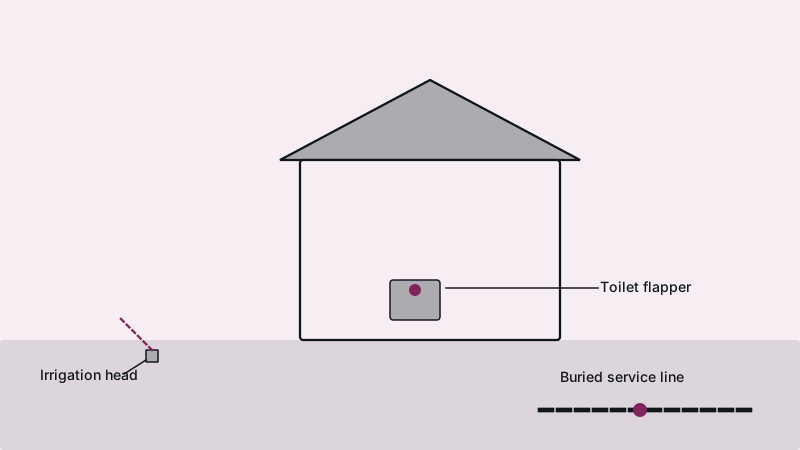
Three things explain most surprise bills: a leak you cannot see, outdoor watering that ran more than you thought, and a billing period longer than usual. Work through them in that order, because the first two cost you money every day they continue. Plumbers handle the leak side; for everything else on this site, begin at the Capistrano Plumbing home page. The meter is the neutral referee here, since it records what actually passed through, whatever the bill implies.
Which hidden leaks usually cause a high water bill?
Begin with the toilet whose flapper lets water creep past. After that come a faucet or shower valve that weeps, an irrigation line on its way out, and a pinhole or split in buried pipe. The silent toilet can lose much more than a faucet you can watch dripping, so eliminate it first.
EPA says the average household's leaks waste more than 9,300 gallons of water a year. Rank your suspects by how much they can waste:
- Toilet flapper or fill valve. Quiet, constant, invisible. The running toilet explainer covers the fix.
- Irrigation. A cracked head or a broken line throws water into soil where nobody looks.
- Service line or slab pipe. The most expensive to find and fix.
- Faucets and showers. Smaller volume, easy fix. The leaky faucet and high bill article shows the math.
What is a quick test for a leak?
Record the meter, keep every tap shut for two hours, then look again; a changed number means a leak, the same approach EPA recommends. Then test the toilets by tinting each tank with food coloring and waiting ten minutes. Color showing up in the bowl, unflushed, names the culprit.
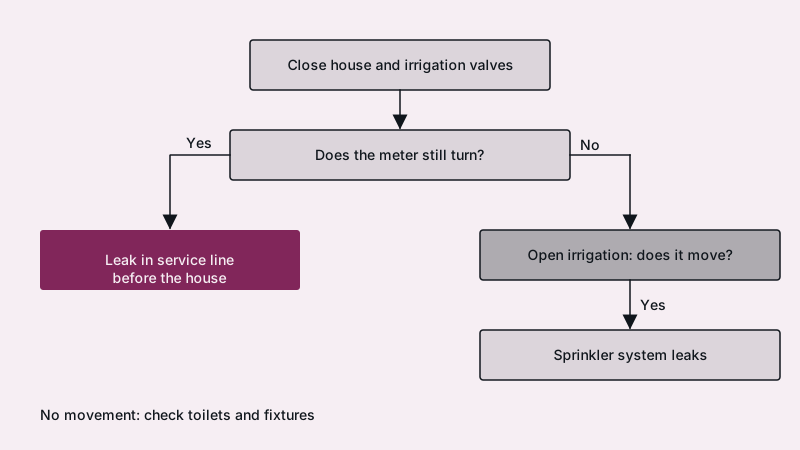
For homes served by Moulton Niguel Water District, the district's guide adds a refinement. Close the house shutoff valve and the irrigation valve, then look at the meter. Flow with both closed points to a leak in the service line before the house. Flow that stops when irrigation is closed puts the problem in the sprinkler system. The district's smart meters also record hourly use, and its online portal shows when a continuous flow began. Matching that start time to something that happened that day, such as a hose left on, narrows the search.
Why is the bill high in winter when the lawn is off?
Irrigation normally shrinks in cooler months, so a high winter bill points toward leaks, houseguests, a billing cycle with extra days, or a water heater or recirculating line misbehaving. EPA suggests checking usage in a cold month such as January or February: if a family of four goes past 12,000 gallons a month, there could be serious leaks.
Things that raise winter use without a leak:
- Irrigation timers left on a summer program. Rain does not always interrupt a controller.
- Guests, a new baby or a returning college student. More showers and laundry.
- A longer billing cycle. Count the days on the bill.
- A failed meter read or an estimate. Compare the meter dial to the bill's reading.
Cooler weather also hides lawn leaks. Standing water in a flower bed or a patch of green in dry grass is a sign.
Is a high bill the same as a leak?
No. Dollars can rise with no leak when tiered or budget-based rates push the last gallons into a pricier band, or when a water softener or recirculating loop draws more than expected. Set this period's gallons beside last year's: a leak appears as extra gallons, not only extra dollars.
The water softener and high bill guide covers regeneration use. Rate changes show up as a higher price per unit of water, so check the usage line before accusing a pipe. If gallons are flat but dollars rose, call the district's customer service rather than a plumber first.
How do I dispute or ask for an adjustment on a high water bill?
Contact your water provider with the bill, the leak repair receipt and the dates. Moulton Niguel Water District's published guidance says a customer who fixes a leak promptly and returns to efficient use may request an adjustment for one high bill. Other districts have their own rules, so check your own provider's website or customer service line.
To improve your chances:
- Keep the plumber's invoice showing what was repaired and the date.
- Photograph the meter before and after the repair.
- Make the request in writing and file a copy.
- Ask whether payment is due while the request is reviewed.
Leak detection and repair costs vary, and guides price tracing a hidden leak separately from fixing it. See the leak detection price guide for ranges.
What does a bursting or running pipe sound like?
Some bursts bang, but the more common signature is a hiss or steady rushing behind a wall, or a faint trickle on a still night. A thump or rattle right after a tap shuts is typically water hammer, a pressure surge and not a leak. Neither noise proves anything, so let the meter decide.
The thumping noise gets its own write-up on the water hammer page. Running water that persists with every fixture off needs a meter check, then a plumber if it is confirmed. If you want a visit, the quote form takes the description.
Common questions
How much can a running toilet really waste?
A lot, and without making a sound. A flapper that never seals lets a thin stream slide into the bowl day and night, and small losses add up fast over weeks. The dye test takes ten minutes and costs next to nothing.
Can a pinhole leak under the slab raise my bill?
Yes, and this is one of the harder causes because nothing shows at the surface. A meter that moves when everything is off, a warm floor spot or the sound of water below the floor are the clues. Pinpointing a slab leak needs a plumber with detection equipment.
Does someone need to be in when the plumber comes for a leak check?
An adult has to open the door and okay any work, and it saves time to show where the shutoff and meter sit. The check itself is a short visit. With an outdoor meter you may not need to stand beside it, only to give house access.
Is it normal for my bill to be higher in summer?
Yes, because irrigation and cooling often increase use between roughly May and October in Southern California. Use is the number to watch, not just dollars. If summer use looks far above last year, check the controller's schedule and run the meter test on the irrigation valve.
How long is a hidden leak hunt?
The meter and dye tests take minutes. A detection visit can run a few hours, depending on whether the pipe is reachable. Slab leaks take longer to pinpoint and repair, so have the quote spell out what it includes, who restores any opened floor or wall, and whether a permit applies.
Sources
Updated