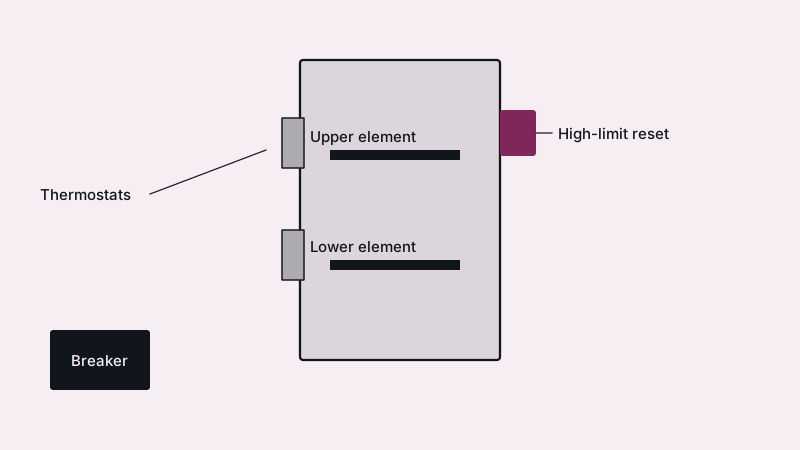
Four suspects explain most dead electric heaters, and the first pair take under a minute: a tripped breaker and a tripped high-limit button. If neither is it, a worn heating element or thermostat is next in line, and a plumber can change one. The checks below go in the order a technician would take them, with a clear mark where homeowner work ends. Wider heater trouble sits under water heater repair; a visit is booked through the quote request.
Which check comes first on a cold electric heater?
Start at the panel. The heater runs on a double-pole breaker, commonly 30 amps and often labeled for it, and that breaker may have flipped. Switch it fully off, then on, one time. A second instant trip means a short, so leave it off and phone someone.
Power present but no heat? Suspect the high-limit safety switch: a red button sitting on the upper thermostat under a small cover. Kill the breaker before lifting that cover, since 240 volts sit just behind it. Press the button once. One trip after an overheat is plausible; a button that trips again points at a failed thermostat or element.
What if the water is warm but runs out fast?
Blame the bottom element or its thermostat. Inside the tank sit two heating rods, one high and one low. The top rod gets first call on power, while the bottom one does most of the heating, so its failure leaves a brief burst of hot water before the tank turns cold.
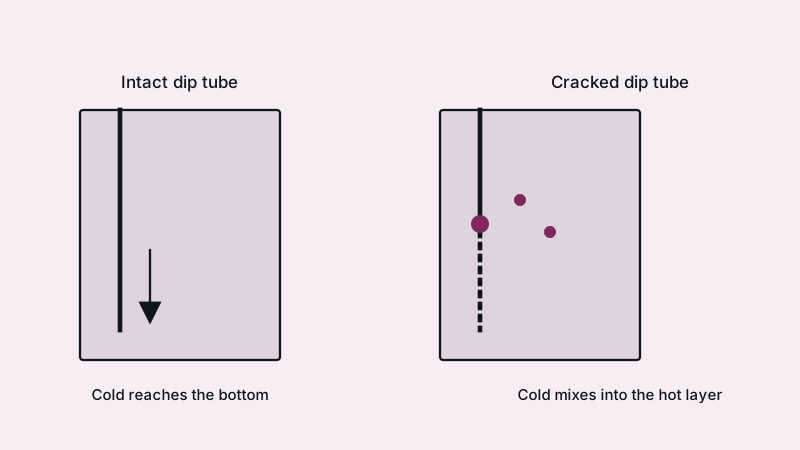
A cracked dip tube, the plastic pipe that steers incoming cold down toward the base, gives the same complaint, because cold water then mixes straight into the hot layer. Sediment buildup, common where water is hard, also coats elements and reduces output. Which of these applies is a test a plumber runs with a meter in a few minutes.
Who tests the elements and thermostats, and how?
With a multimeter reading continuity, once the breaker is off and a tester shows the circuit dead. A healthy element shows a few ohms up to a few dozen, an open one shows infinity, and thermostats get voltage and continuity checks. Live testing means 240 volts, so this is a job for an electrician or plumber.
Water first, power second: a plumber confirms the tank is full before restoring power. Energize an element in a half-empty tank and it burns out in seconds. Let a hot tap run steadily, then close the breaker, after any draining or repair.
What will an electric heater repair run?
The written quote sets the price. It should name the part, the labor and any flush the old tank needs, and the total rises if the tank is old or the work uncovers more trouble. A replacement tank costs far more than an element or thermostat, so repair makes sense on a heater still under about ten years old. Ask the plumber to price both options on paper.
Consider those figures a loose guide until a quote follows the diagnosis. Both elements are often replaced together, since they age together. The element job is covered in replacing a water heater element, and a full swap in electric water heater replacement cost.
Should I stop repairing and buy a new tank?
Yes when the tank is ten to twelve years old, weeping at the base or seams, or failing again and again. A leaking tank cannot be patched, and a damp floor beside it settles the question; the EPA estimate for typical household losses runs past 9,300 gallons yearly.
Read the build date off the data plate. Corrosion, rust-colored hot water and rumbling noises from sediment often come with an aging tank. An anode rod swap can prolong a younger one; see anode rod replacement. For a general age guide, read how long heaters last.
Whose job is it to restore hot water in a rental?
The landlord's, in nearly every case. The state's habitability statute, Civil Code 1941.1, names hot and cold running water as a rental essential. Send the report as a letter or email, hold on to a copy, and describe symptoms without opening any panels yourself.
Electric heaters in apartments and condos sometimes sit in a shared closet or on a separate meter, which makes the landlord's or association's role clearer. The rules and your options are laid out in apartment hot water laws. For a home you own, there is no such step, and the first call is a plumber.
How can I keep the heater from failing again?
Set the thermostat no higher than about 120 degrees Fahrenheit, which is the usual recommendation and also reduces scalding risk. Once a year, run several gallons out of the drain valve to carry sediment away, which is heavier where the water is hard. Keep the area around the tank clear and dry.
If you are away for weeks, turn the breaker off, and when you return, refill the tank fully before switching it back on. Check the floor beneath the heater now and then. A small stain under the tank is easier to deal with than a flood.
Common questions
Is pressing the red reset button something I can do?
Yes, if the breaker is off while the cover is open, because the wiring inside carries 240 volts. Scorched insulation, melted wire or any water in the compartment means closing it up and calling a professional. Never handle wiring while power is on, and never poke at it with metal tools.
The breaker will not stay on. What does that mean?
It points to a shorted element, a bad thermostat or damaged wiring, and only rarely to a weak breaker. Flipping the switch over and over heats the wire. Leave it off and have the heater inspected, because a fault like this does not clear by itself.
Could a gas heater have the same problem?
No, gas models fail in other ways: the pilot, the thermocouple, the gas valve. Yours runs on gas? Begin with no hot water at home. Should gas ever be smelled, walk outside and ring SoCalGas on 1-800-427-2200 before anyone examines the heater.
Why is the hot water gone just after a power outage?
Power coming back can trip the high-limit or the breaker, or an element may have failed during the surge. Start with the breaker and the red button. Still lukewarm after a few hours of heating? An element is probably to blame. Mention any rumbling sediment noise or the heater's age to the plumber, because both affect whether repair makes sense.
The rest of our guides start from plumber mission viejo.
Sources
- Wikipedia, Water heater
- EPA WaterSense, Fix a Leak Week
- California Civil Code section 1941.1, tenantable dwellings
- CSLB, hire a contractor
Updated